
Planner Profile: Meet Aliyah Riley, AICP

Planner Profile is a series spotlighting the unique experiences of our peers who are making a difference in the profession and at APA.
Aliyah Riley, AICP, a planner in Huntsville, Alabama, is a member of the Alabama Chapter of the American Planning Association and the Planning and the Black Community and City Planning and Management divisions.
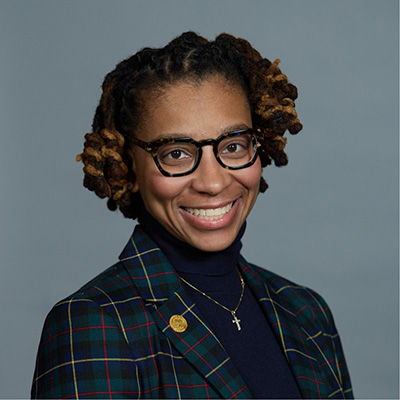
Aliyah Riley, AICP. Photo courtesy of Aliyah Riley.
How did you discover planning as a profession?
I discovered planning while attending an open house for the College of Agricultural, Life and Natural Sciences, which houses the Department of Community and Regional Planning at Alabama Agricultural and Mechanical University. During the event, Joyce Pressley, PhD, demonstrated a hazard-mitigation model showing how flooding affects rural communities. Using a plastic storage bin filled with water, she brought the concept to life.
Pressley described planners as people who prepare communities for the future, connect individuals and communities with resources, recover from natural disasters, advance sustainability, and enhance the overall quality of life. As I listened, my friend turned to me and said, "Aliyah, that's you." I agreed, but replied, "Yes, but let me finish this first degree."
By the following semester, I had enrolled in my first planning course with Jordan Yin, PhD, beginning the journey that would ultimately become my profession. That initial description of planning continues to shape how I approach my work today: as an opportunity to connect people, policy and resources to build stronger and more equitable communities.
What aspect of your work have you found most fulfilling?
The most fulfilling aspect of my work is seeing an idea evolve into a completed project that enhances the community. Because I primarily work in current planning (equivalent to planning services), I have the opportunity to engage with developers from the moment they present a concept, help them navigate the development process, and guide the project toward a successful outcome while ensuring that quality-of-life considerations remain central.
The impact is visible at every scale — from amenities, landscaping and sidewalks within residential neighborhoods to mixed-use developments that create diverse opportunities for people to live, work and play.
I often reflect on the question, "If I had a million dollars, what would I do to improve my community?" In many ways, each developer who arrives with an idea offers me an opportunity to help answer that question. I find it deeply rewarding to contribute my perspective and planning expertise to projects that will shape my city for years to come.
What planning effort/initiative are you most proud of that, as a planner, you helped make possible?
I am especially proud of helping produce the Huntsville Development Review, a report that examines development activity, emerging trends and growth patterns. It provides data that helps city leaders track development, identify growth opportunities, and make informed decisions about infrastructure, housing and economic development. It also supports efforts to attract and retain industries and strengthens coordination with our local school systems as they plan for the needs of a growing community.
I'm proud to contribute to a resource that helps the city understand where it has been, where it is growing, and how it can prepare for what comes next.
If you could create the perfect community, what would it be like?
My perfect community would be inclusive, connected and designed to provide every resident with the opportunity to thrive. It would offer a range of attainable housing choices, strong schools, quality jobs, accessible public spaces and reliable transportation options. Residents could safely walk or bike to parks, neighborhood businesses and essential services while still enjoying the character and sense of belonging that make a community feel like home.
It would also be a place where growth is intentional and sustainable — where new development respects the environment, strengthens existing neighborhoods, and creates opportunities without displacing longtime residents and businesses. Most importantly, residents would have a meaningful voice in shaping their community.
Want to be the next Planner Profile? Fill out this form to help us get to know you better.