

Comedy, Chaos, and Community: This Planner Uses Theater to Teach Flood Resilience
summary
- Sabina Sethi Unni, a New York City planner, blends comedy and theater to make climate preparedness and flood resilience more accessible to the public.
- Productions like Please Don’t Flush and Flood Sensor Aunty combine absurdist comedy with practical lessons on flood risk and stormwater management.
- Sethi Unni believes planners can use theatrical techniques to build community engagement.
These days, when Sabina Sethi Unni isn't reimagining public spaces for kids, she's dreaming up eccentric characters for public theater productions throughout New York City.
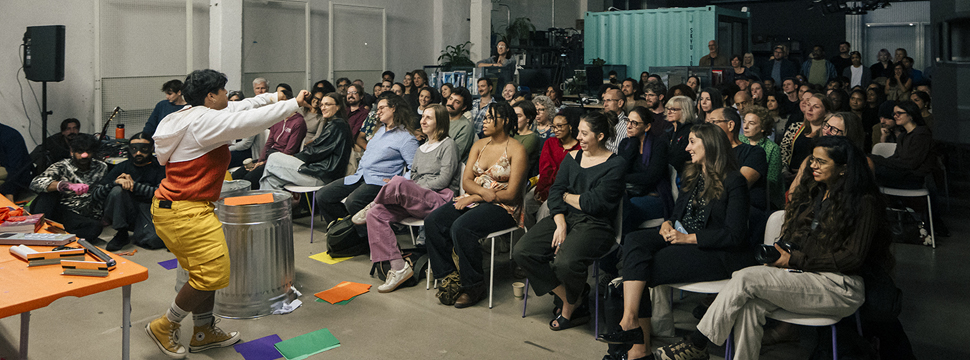
The urban planner's latest comedy, Please Don't Flush, debuted this September during Climate Week NYC. The plot revolves around a community board deciding the fate of a waterfront development that concerns local seagulls and plumbers alike. As the board weighs the future of the mysterious project, they become sidetracked planning their biannual gala, celebrating the second-vice-chair's half birthday, and fending off the anti-anti-anti development commission, including a trash-obsessed raccoon. Between the songs and shenanigans, the production interweaves lessons about flood risks and stormwater management.
This isn't the first time that Sethi Unni has merged disaster preparedness and public theater. Flood Sensor Aunty, about a flood sensor who dreams of stardom while working in her aunt's chai shop, premiered in 2024 and toured all five boroughs. Sethi Unni partnered with New York City Emergency Management (NYCEM) and the nonprofit Waterfront Alliance for the performances, which also distributed emergency planning resources, like flood alarms and headlamps.
We talked to Sethi Unni about the intersection of planning and theater, community engagement, and what advice that her characters might have for planners.
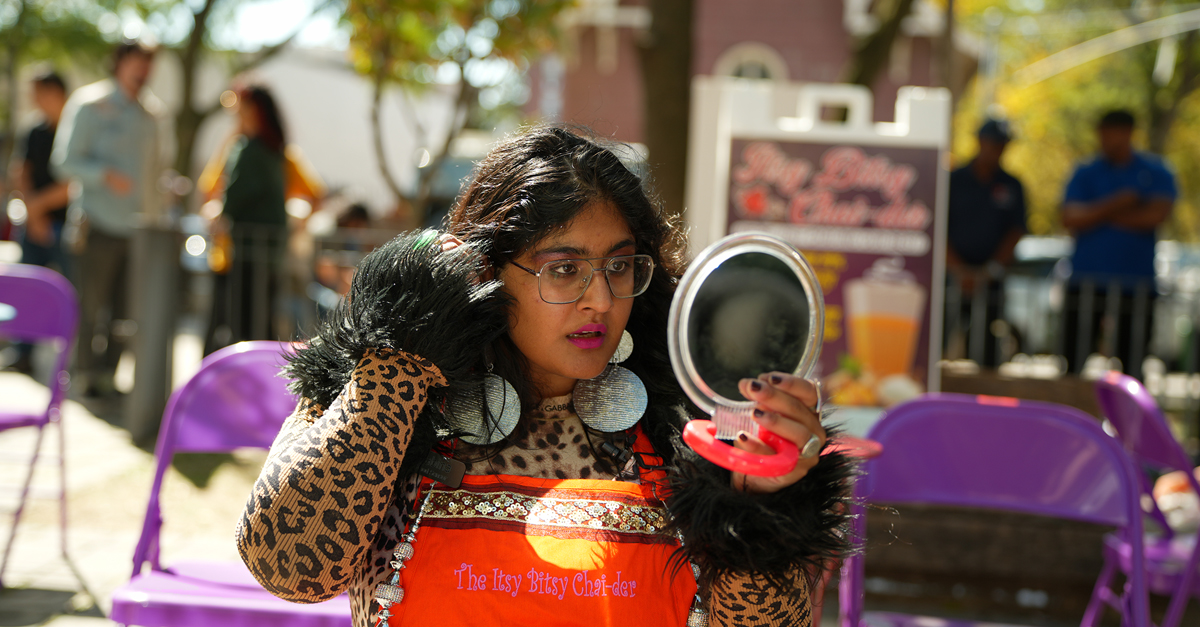
Sabina Sethi Unni, a New York planner, performs in Flood Sensor Aunty, a play she created to teach people about flood resilience. Photo by Purna Venugopalan.
ELISSA CHUDWIN: How does your planning and theater work relate?
SABINA SETHI UNNI: In a real sense, I do feel like they're so mutually reinforcing. Being a planner and a theater artist helps me think of creative ways of being a storyteller and doing community engagement. What are the tools that we can be smart about and reimagine? What devices are good at captivating audiences? Being a planner helps me think a lot about public space in a creative way and what spaces can be a theater site.
CHUDWIN: Flooding is a heavy topic, but the premise of Please Don't Flush is funny and quirky. How do you strike the right tone?
SETHI UNNI: That is something I am always nervous about and recalibrating. When I first did this kind of public theater, it was shortly after Hurricane Ida. I thought a lot about impacted neighborhoods and wanted to look at this gap in information and resources about flooding, particularly in South Asian and Indo-Caribbean communities. It still felt really soon, so I waited a couple of years to bring this play to impacted neighborhoods as a valuable educational resource.
I'm always thinking about humor — making sure you're punching up. What are we laughing at? Who are we laughing at? Are we laughing together? You have to be a little silly if you're doing things in public spaces. If you were to do something really tragic or even serious, you could potentially re-trigger or traumatize someone.
I do a lot of work with nontraditional theater artists like bureaucrats and organizers, so it can be cathartic to make these comedic experiences. But I always try to balance it. We'll have this silly writing and comedy about flooding, but afterward, there will be a real call to action from organizers and community leaders who are doing work around flooding.
CHUDWIN: Where do you find inspiration for some of your ideas?
SETHI UNNI: In my job as a planner, I see our wonderful ecosystem of bureaucracy, municipality and neighbors fighting. All this stuff is so beautiful and interesting to me. I was attending a Brooklyn community board committee hearing about turning one city street into more of a plaza. It was the most heated debate I've ever seen for a very small change, which is the story of our lives as planners. Small, almost invisible things have uproarious debates.
I don't think anything I've written has been inspired by a real person or a real incident, but you definitely see all kinds of characters. I do feel like our world of planning is so theatrical and a spectacle.
CHUDWIN: How did your partnership with NYCEM come about for Flood Sensor Aunty and Please Don't Flush?
SETHI UNNI: I sent a cold email to their community preparedness team in 2024, just wanting to fact check information, particularly about basement apartment flooding. One lovely bureaucrat, Jill, who has a past life in theater, and I really hit it off.
Then I was like, "We should write you into the play." Each time we did more performances, I would say, "You have to have a monologue, and you have to be part of the dance." Now, she's a full character. Jill is so fun and is a wonderful actor, dancer and singer — all the things you need to be — but is also helping guide the priorities of NYCEM.
CHUDWIN: What do you hope viewers learn from Please Don't Flush?
SETHI UNNI: Everyone wants to talk about flooding, and everyone understands that flooding is an affordability issue and a race issue. I also feel like people do not want to talk about climate change, but there are ways to talk about that, preparedness, and the environment that really get at people's daily wants and needs.
A core message of this work is that knowing your neighbors is the best way to protect yourself from flooding, from power outages, and a great way to be a community member. I had someone come to me after our play and say, "I really want to know my neighbors, but I'm really shy," and those are good points. There are ways that we can help people better facilitate those conversations. One thing I do after the play is give everyone a postcard that I'll mail for them, where they can write to their neighbor, say hi and ask if they want to meet up for chai — or make a disaster preparedness plan.
Top image: Please Don't Flush, which teaches New Yorkers about flood resilience, was created by planner Sabina Sethi Unni. Photo courtesy of New York City Emergency Management.
ABOUT THE AUTHOR
Elissa Chudwin is APA’s content associate.