


Career Resilience
Rehearsing How to Respond to Uncertainty

summary
- Mental rehearsal is a practice of intentionally imagining a future situation in detail.
- Different than just picturing a successful outcome, mental rehearsal is a way to prepare your brain for future challenges so if they do arrive, those situations feel less unfamiliar, making it easier to respond thoughtfully rather than react impulsively.
- Practicing mental rehearsal can take as little as five minutes.
The conference room is nearly full, with community members still filing in. The presentation is ready to go, the slides have been thoroughly reviewed, the data is accurate, and comments are well prepared. Months of work have led to this moment, and by all rights, the planner should feel comfortable and ready to present.
But that's not what they are worried about.
What if someone challenges the traffic analysis? What if, during public comment, a resident accuses the department of ignoring community concerns? Will the discourse turn political? What if they are unable to form a response to an unexpected question from the dais?
These anxieties are a shared experience among many in the planning profession. While the technical work may be complete and well executed, preparing to navigate uncertainty, conflict, and public scrutiny is another challenge altogether. It is the human element that creates the greatest pressure because it is so unpredictable. No amount of reviewing slides can fully prepare someone for an emotional exchange, a difficult question, or a conversation that suddenly shifts in an unforeseen direction.
Yet preparation doesn't have to stop once the presentation is finished. We can rehearse how to respond to uncertainty. That is the premise behind mental rehearsal, a technique grounded in psychology that encourages people to mentally practice not just what they plan to say, but how they want to think, respond, and adapt when the unexpected happens.
More Than Positive Thinking
Mental rehearsal is the practice of intentionally imagining a future situation in detail. Rather than simply picturing a successful outcome, it involves mentally walking through the entire experience, including potential obstacles and how you will respond to them.
Psychiatrist Dr. Tracey Marks describes mental rehearsal as a way of preparing your brain for future challenges. Instead of waiting until stress arrives, you give your mind an opportunity to experience the situation ahead of time. When the real moment comes, it feels less unfamiliar, making it easier to respond thoughtfully rather than react impulsively.
An important distinction is that effective mental rehearsal focuses on the process, not just the outcome. It is common for people to imagine themselves succeeding before an important event. They picture delivering a strong presentation, answering every question with confidence, and leaving the meeting feeling accomplished. Psychologists refer to this as outcome visualization because the focus is on the end result.
Mental rehearsal goes a step further through process visualization. Rather than imagining only how you hope the meeting will end, you mentally rehearse everything that happens along the way. Consider a quarterback standing at the line of scrimmage before the ball is snapped. In the seconds before the play begins, they mentally visualize the routes, anticipate defensive movements, and prepare for multiple possible outcomes. That brief mental rehearsal doesn't guarantee success, but it helps the brain prepare for rapid decision-making once the play is underway.
Research supports this idea. Studies have found that mentally rehearsing an action activates many of the same neural networks involved in actually performing it. While mental rehearsal doesn't replace preparation or real-world experience, it helps make a future situation feel more familiar and less fraught with unknowns.
For planners, this means the goal isn't to predict every question that might arise during a public meeting or to script every possible answer. Instead, it's to prepare yourself to respond with curiosity, composure, and confidence if the unexpected occurs. That shift transforms mental rehearsal from a presentation technique into a practical strategy for building resilience.
Putting Mental Rehearsal Into Practice
Mental rehearsal can take as little as five minutes.
Start by identifying an upcoming situation that feels significant. Picture the setting and the people involved. Then, instead of imagining the meeting going perfectly, mentally walk through a few realistic scenarios.
Now shift your attention inward. Rather than focusing on what others might say or do, consider how you want to respond. Perhaps it's taking a breath before answering; maintaining a calm, neutral expression; asking a clarifying question; or acknowledging a concern before continuing the discussion.
The goal is to become familiar with the kinds of situations that often create stress and to mentally practice responding in a way that reflects your values and professionalism. In doing so, you're not rehearsing the meeting itself. You're rehearsing your response to it.
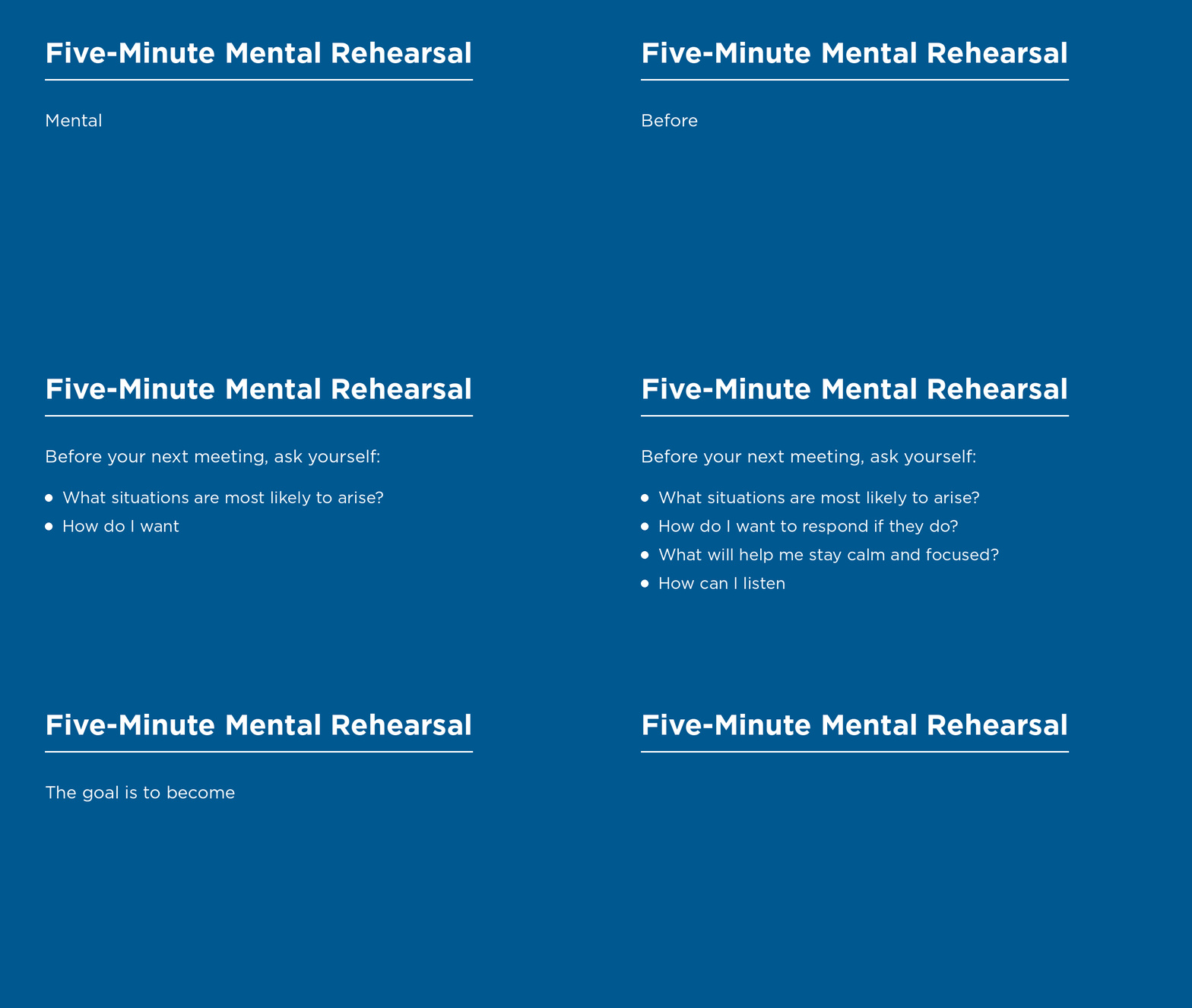
Five-minute mental rehearsal practice. Created with the use of AI by Catherine Bixler.
Resilience Begins Before Adversity
Resilience is often associated with recovering after something difficult happens. Mental rehearsal offers another way to think about it.
By practicing how you will respond before a challenging moment arrives, you build familiarity instead of uncertainty; you strengthen your confidence before it is tested. And when the meeting, presentation, or difficult conversation finally comes, you are prepared for it. For planners, that preparation can become another valuable tool for sustaining resilience.
To learn more about mental rehearsal, you can watch this video by Dr. Tracey Marks.
Top image: DigitalVision Vectors - Dusan Stankovic
About the author