
Is Transit Primed to Be the Next Abundance Movement?
summary
- High transit construction costs are fueling calls for a transit abundance movement focused on faster, more affordable project delivery.
- The Institute for Progress' Transit Abundance Playbook offers 15 strategies to reduce costs, streamline processes, and strengthen transit agencies.
- Planners can improve transit project delivery by sharing lessons, setting realistic goals, and building stronger institutional capacity.
Why is it so hard to build transit projects today? For a country that once built the world's largest network of streetcar tracks, the U.S. now leads in construction costs.
"We went away from building big things — even things that are really good and positive that people support and that we want to build," says Will Poff-Webster, director of infrastructure policy at the Institute for Progress (IFP). "We're at a point where even when people want to build something, they still know it's going to take 15 years and go way over budget."
Through that lens, IFP recently published the Transit Abundance Playbook, a collection of 15 essays by researchers, planners, and practitioners aimed at changing the conversation and speeding transit project delivery while reducing costs. It uses the abundance movement — the idea that removing red tape or overly burdensome requirements to build more of what people need, like transit, housing, and energy infrastructure, will lead to affordability — as a starting point for examining the issues.
Planners, using their long-term vision and expertise, can champion the strategies in the playbook, particularly by helping bring together the agencies, stakeholders, and decision-makers needed to get complicated transit projects to the finish line.
"It's never too early or too late to get this right," says Poff-Webster. "My hope for planners is for them to ask for permission to do something differently. I've worked in the public sector my whole career, and it's a hard place to do something in a new way. Part of what we are trying to show [with the playbook] is that not everyone has done it the same way, and we can learn from each other and do better."
Philip Plotch, PhD, FAICP, principal researcher and senior fellow at the Eno Center for Transportation, who authored one of the essays in the compilation, says the playbook shows that "better rules, better incentives, better information, and better institutional capacity can make a difference."
Conversely, he says if agencies lack enough experienced staff, realistic schedules, reliable cost estimates, or clear project goals at the beginning, they may pay for those weaknesses later through redesigns, change orders, delays, and disputes.
Learn from Mistakes, Don't Hide from Them
Plotch, who is also the vice chair of policy of the American Planning Association's Transportation Planning Division, says that when he was interviewing transportation professionals for "The People Behind Major Transit Projects" — an Eno Center report from June 2025 — he was surprised to discover that many transit agencies were not documenting the lessons they learned from managing large projects.
"At first, I assumed they were documenting their lessons, but not making those reports available to the public," he says. "But that wasn't the case: Many agencies were afraid to document the lessons they learned, because of concerns that public records laws would require them to disclose these reports."
Plotch posits there are three major reasons why transit agencies don't document these situations: the idea that airing their dirty laundry can reflect poorly on staff, supervisors, and institutions; the notion that if an agency documents its mistakes, a contractor could use that information in litigation against the agency; and the belief by many agencies who fear that revealing mistakes might jeopardize their ability to secure future local and federal funds.
"My fellow planners should find this deeply concerning, because it means we don't have all the information we need to plan effectively and deliver successful projects," Plotch says. "Imagine if a football coach only watched the highlight videos of plays where his team performed well. If the coach really wants his players to improve, he needs to review the missed tackles, dropped passes, and offside penalties. We don't want to keep football coaches and their players in the dark."
Plotch expanded on this idea in his essay for the Transit Abundance Playbook, "Share the Truth About Transit Project Failures." He argues planners need to understand these major problems facing transit project delivery because doing so will help them prepare more realistic scopes, cost estimates, schedules, and risk mitigation measures.
"Planners and our agencies need to learn about both positive and negative experiences, so that we are better prepared to avoid costly mistakes, manage risk, and deliver projects that better serve the public," he says. "Planners also have a responsibility to step back every once in a while and consider what laws, regulations, and policies are leading to poor and unintended outcomes. Sharing our concerns is important because if policymakers are not aware of problems, they certainly aren’t going to address them."
Read the Transit Abundance Playbook.
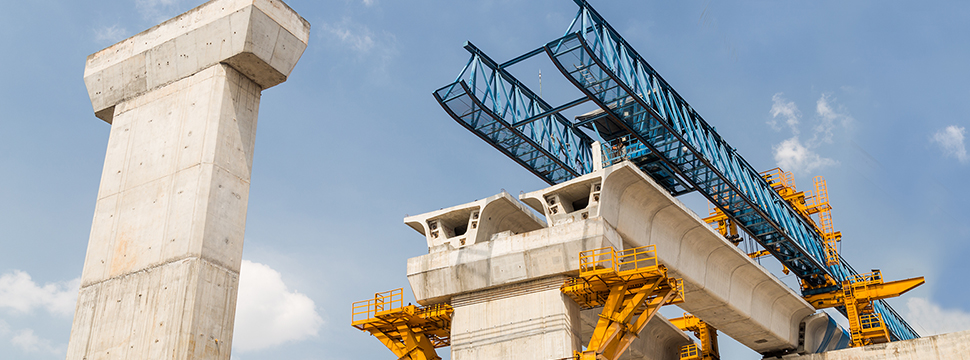
Top image: Construction of a mass rapid transit line using heavy equipment. Photo courtesy of ThamKC/Getty Images.
ABOUT THE AUTHOR