


Uncovering JAPA
Designing Parks for the Ebb and Flow of Use
JAPA turns research into action. All APA members have access to JAPA and its full archive.
summary
- Smartphone data can reveal when and how people use parks, helping planners understand patterns that traditional park classifications often overlook.
- Researchers propose six time-based park categories that better reflect how parks function throughout the day and week.
- These classifications can guide park design, programming, staffing, and maintenance to better match community needs and improve equitable access.
Park designers are embracing the temporary. Pop-up art installations, spring and summer gardens, week-long light demonstrations, and autumn evening concerts are some of the many ways parks change with time. But not all patterns in parks are planned events.
In "Planning for Rhythmized Urban Parks: Temporal Park Classification and Modes of Action" (Journal of the American Planning Association, Vol. 92, No. 1), Xiyuan Ren, ChengHe Guan, Shengze Chen, Meizi You, Ying Li, and Kangning Huang propose new time-based classifications, revealing surprising use patterns of, and opportunities for, Tokyo's parks.
Smartphone Data: A New Way to Understand Park Use
Smartphone data is changing park planning research. While not everyone uses a smartphone, this data offers immense value by showing where people are throughout the day. Planners can now see in high resolution when, where, and for how long people visit parks. Despite access to this new data, parks are often still classified in terms of space and size, neglecting the way park uses change over time.
Each park has a unique, rhythmic schedule. Throughout the week, park visitors ebb and flow, spending different amounts of time and engaging in a variety of activities. Morning jogs, weekend family picnics, and summer festivals are some of the rhythmic patterns that park planners should notice. Seasons, public transit schedules, and weather further complicate the patterns of usage.
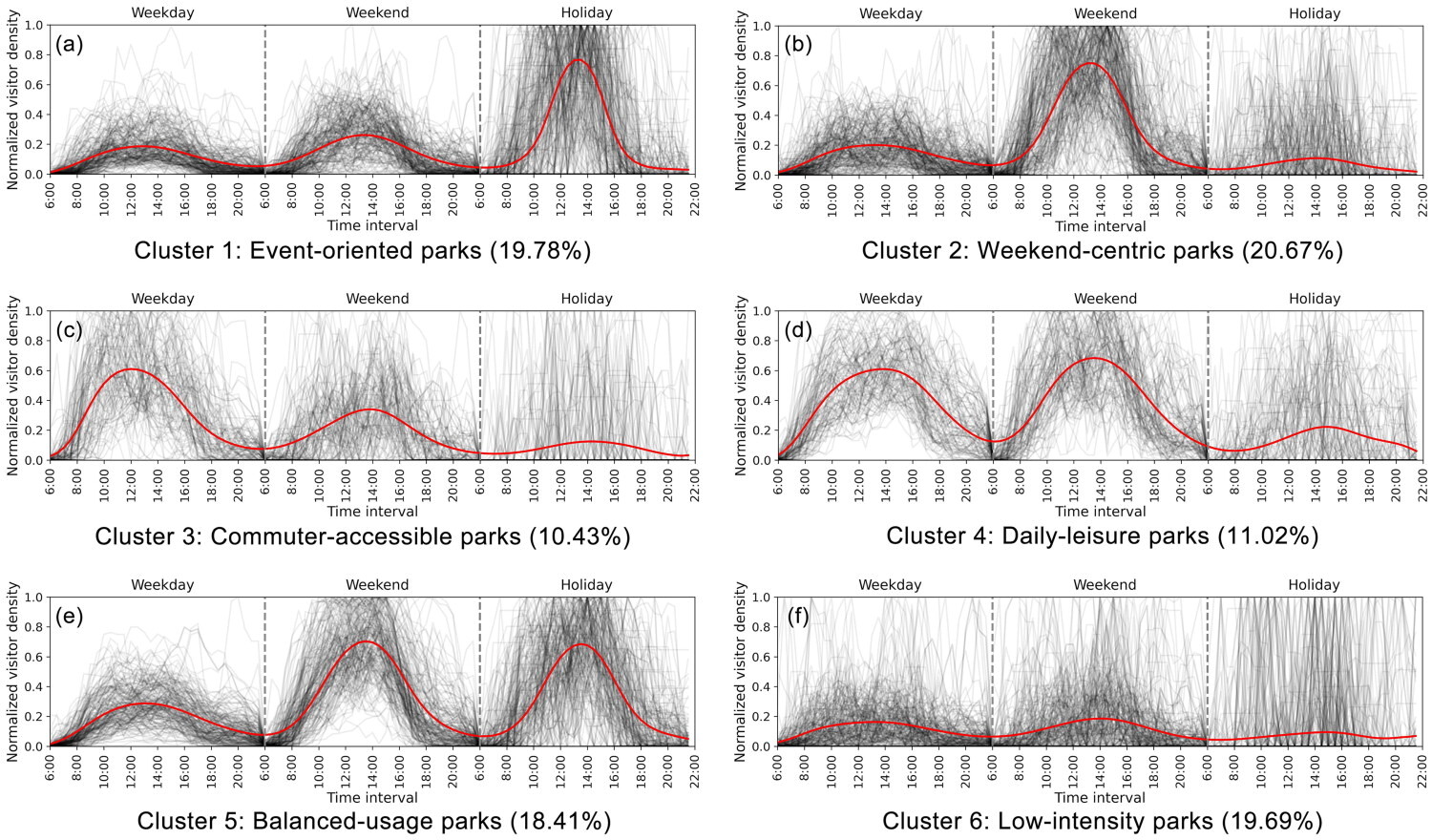
Figure 1: Classification results showing popular visitation times for Tokyo's many parks. (Credit: Authors)
Focusing only on place fails to account for how park functions shift across time. A before-work dog walking route may transform into an after-school playground hub that overlaps with an evening teenage hangout, serving distinct user groups with different needs. When planners fixate on physical form alone, these rich rhythms are lost.
Six Novel Park Categories Based on Time and Physical Aspects
The authors measured park visitation in Tokyo with an eye on each park's unique schedule. Some parks were most visited on holidays while others were busiest on weekdays at lunchtime. From the patterns observed, the authors propose six novel categories for park classification:
- Event-oriented parks
- Weekend-centric parks
- Commuter-accessible parks
- Daily-leisure parks
- Balanced-usage parks
- Low-usage parks
These categories' time-based definitions are in contrast to the spatial and physical aspects typical of traditional park categories:
- Neighborhood parks
- District parks
- Comprehensive parks
- Central parks
- Non-central parks
- Parks without a waterbody
- Parks with large lakes
- Parks with riverfront lakes
This study found that parks with similar physical characteristics can have very different schedules throughout the week and year. For example, Tokyo's neighborhood parks were divided across all six time-based categories.
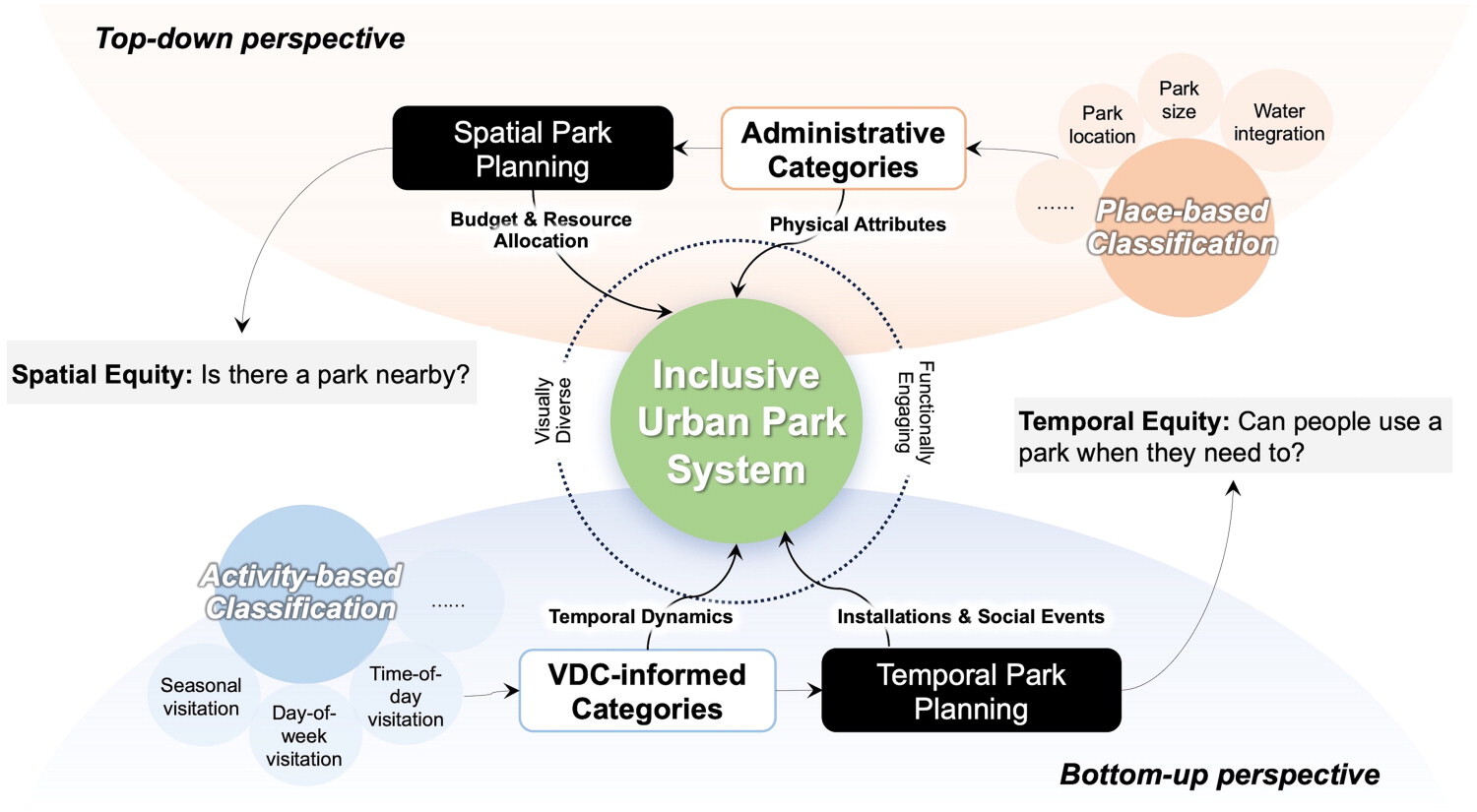
Figure 3: The authors' framework of establishing an inclusive urban park system. (Credit: Authors)
Use Patterns of Visitation to Inform Design
This study highlights the inadequacy of uniform park design. Instead of treating parks with similar physical characteristics the same, planners can use patterns of visitation to inform design, programming, operations, and maintenance. Understanding how and when people use parks allows communities to better match investments with demonstrated needs.
Smartphone data can also support implementation. Insights into visitor patterns can help planners determine when additional staffing, temporary amenities, or transportation improvements are most effective. Over time, real-time data and visitor monitoring can help park managers respond to changing conditions and improve the visitor experience.
By viewing parks as living systems, planners can respond to unique patterns of use and make a park work for the people. Parks can become dynamic infrastructure that harmonizes with the pulse of the city.
Recommendations for implementation
- Event-oriented parks should install temporary seats and provide vendor zones.
- Weekend-centric parks should increase staffing on weekends.
- Commuter-accessible parks should provide short-visit facilities and connect to nearby transit hubs.
- Dailey-leisure parks should offer covered areas for outdoor classes and community events.
- Low-intensity parks should focus on maintaining naturalistic elements.
Top image: Photo by iStock/Getty Images Plus/ Kenichi Sakurai