

Sept. 17, 2026
Across the country, schools and states are restricting student cellphone use as parents, school officials, and lawmakers worry about the devices’ negative impacts on learning, mental health, and real-world relationships.
But by reducing technology use without investing in compelling alternatives, particularly third spaces, they’re treating a symptom, not the problem.
Smartphones deliver dopamine-producing novelty and stimulation, which are important for young people — and they provide a sense of autonomy and independence from adults. They also allow teens to meet a deeper, developmentally appropriate need for social belonging and identity formation. The problem is not the impulse — it is the absence of other compelling ways to meet those needs.
The good news is our civic infrastructure — parks, libraries, trails, commercial districts, community centers, and other civic infrastructure — can be intentionally designed and operated to provide real-world connection to peers, places for enjoyable physical movement, and moments of joy and delight, which research shows help buffer against mental health challenges.
Real places that compete
If phones deliver dopamine, autonomy, and easy social connection, public space needs to deliver those same three things, while becoming a place where teens can build a sense of belonging and identity that give those daily habits meaning.
One example is the Anna C. Verna Playground at FDR Park in Philadelphia. Opened in 2023, it has the largest swing set in North America — a giant oval ring with 30 inward-facing swings, seven slides of increasing height and speed, scalable steel-and-rope birdhouse structures, and climbing logs.
The design works for teens as much as for young children, but the 30-foot slide and giant swing signal it’s a place for real physical risk. Open, accessible environments avoid the “children only” cues that push teens away, while natural materials and a muted palette replace the primary-color plastic aimed squarely at kids. Different ages can share the same features without being segregated into separate zones, and basic comforts like bathrooms, seating, and transit accessibility make it a place where teens can get to and stay.
Designing With Teen Girls: Reclaiming Joy, Agency, and Belonging in Public Space examines how to engage teens in the design process to create places that better reflect their needs, desires, and values.
Early results show teens clustering in groups and using playground equipment in their own ways — climbing higher, swinging harder, turning the megaswing into a shared experience.
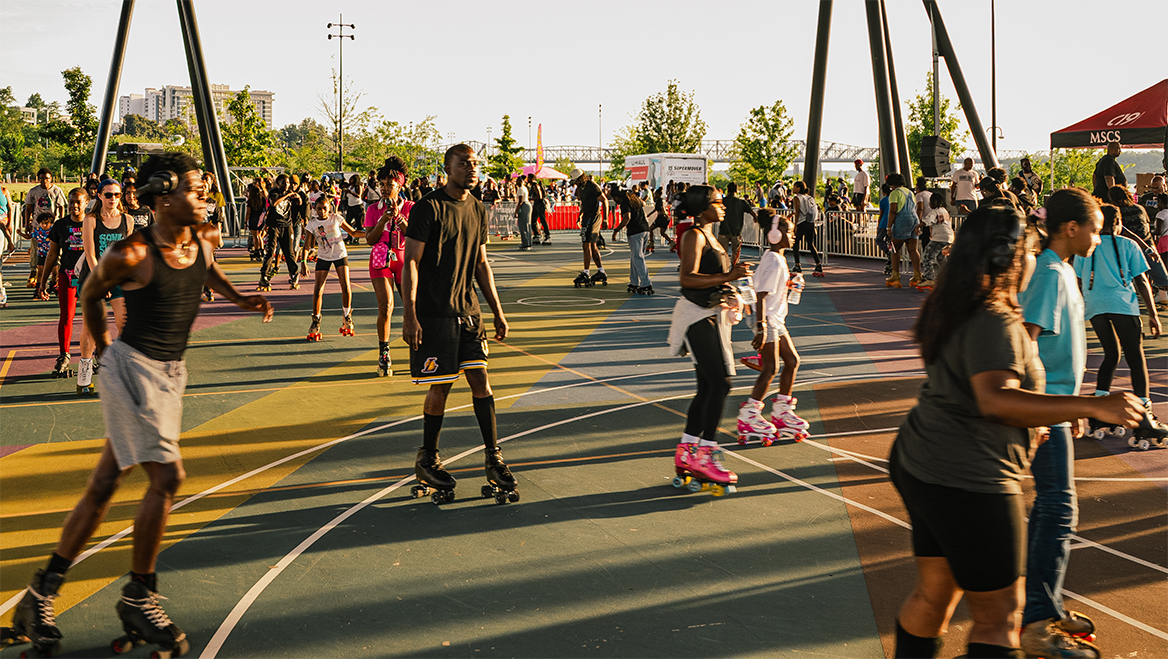
Meanwhile, in Memphis, Tennessee, the Sunset Skate — a recurring roller-skating night in Tom Lee Park — has drawn young people by leaning into teen culture rather than just tolerating it. Two of this year’s themed, DJ-hosted nights, “Jersey Jams” and “Back2School,” were built to attract teens.
The programming is so compelling that teens are promoting it themselves. As one teen skater from the group 901sk8.youth posted on Instagram, “It’s a safe place where teens can have fun, meet new people, and work out your legs … [and] it gives us a positive space to be active, build friendships, and also bring new people into the roller-skating community.”
Strategies to consider
Far too few communities think strategically about how public spaces can attract and retain young people’s interest. Park playgrounds are designed to appeal to small children, even though more than half of playground users are teens and adults. Commercial districts and streets often restrict teens from gathering in groups or doing activities like skateboarding and biking.
Teens already are telling us what they need. Crisis Text Line and Common Good Labs analyzed thousands of anonymized conversations between adolescents and mental health counselors to identify the resources teens turn to when coping with mental health challenges. High-quality public space is uniquely positioned to deliver all but one of the top six responses: opportunities for social connections, making and performing art, playing sports and exercising, books, spending time in nature, and clinical mental health services.
Alexandra Lange’s book The Design of Childhood showed that the built environment is not neutral — it actively promotes or inhibits kids’ independence and social development. Planners should consider these guidelines when creating space that will deliver what teens need.
BUILD FOR COOPERATION, NOT JUST CAPACITY
FDR Park’s megaswing set encourages multiple users to work together. Research from the U.K. shows this format especially draws teen girls, which is a demographic public space design often fails. Prioritizing equipment and features that create shared, negotiated experiences over solo-use amenities can help.
PRIORITIZE INDEPENDENCE
Teens may not go if a parent must drive them. Ensuring teen spaces are accessible via walking, biking, micromobility, and transit (like FDR Park in Philadelphia) should be a core design requirement, not an afterthought. This isn’t just about mobility; it’s an equity and participation issue.
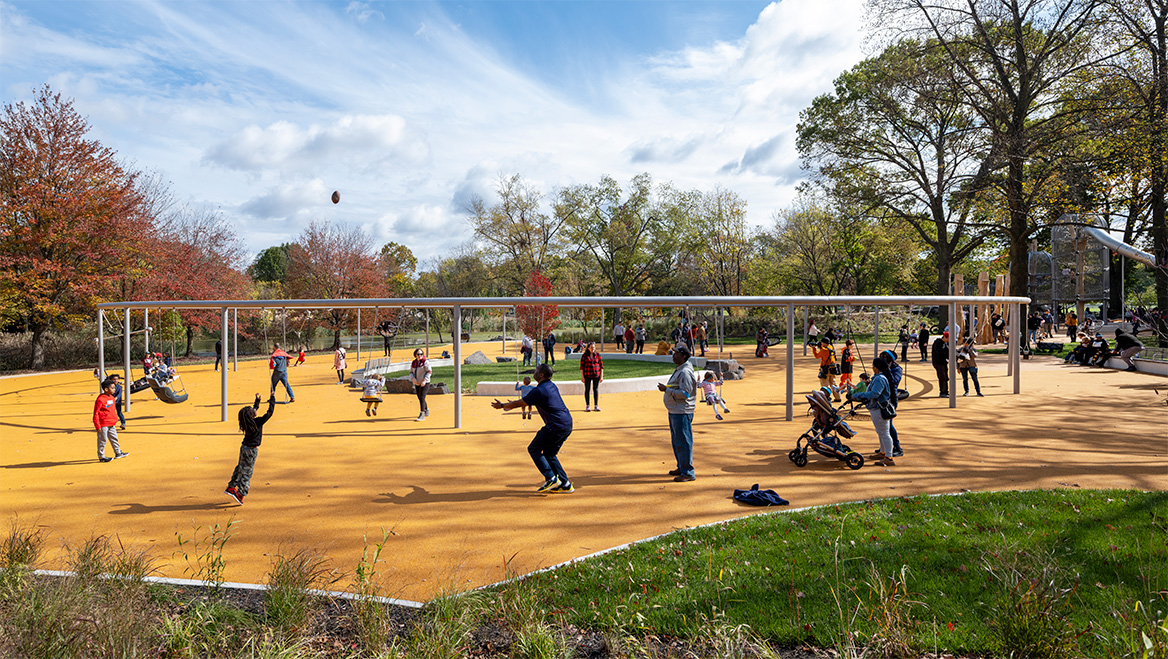
Kids of all ages share the open environment of the Anna C. Verna Playground at FDR Park in Philadelphia. Photo by Sahar Coston-Hardy.
CATER TO TEENS’ INTERESTS, NOT GENERIC RECREATION
A Baltimore study found that teens who developed a “passion project” and built community around it saw significantly better long-term life outcomes, evidence that space supporting a specific pursuit does more for teens than open-ended, unprogrammed recreation. That means designing spaces that can easily support teen hobbies and interests — maker areas, performance space, skate- or sports-adjacent terrain.
TALK ABOUT WHAT STAKEHOLDERS ALREADY PRIORITIZE
Planners can position teen-focused public space as the necessary complement to efforts that build social connection, strengthen school achievement, and improve public health. In Akron, Ohio, the Summit Lake Ambassadors program is a summer initiative that hires young people to care for the places they care about by picking up trash, planting flowers, and mulching garden beds. Making the case with data — like youth mental health research and life-outcomes evidence — can also strengthen the argument for gathering spaces designed for teens.
COLLABORATE WITH THE COMMUNITY TO BUILD BUY-IN
Anticipate and address concerns about unsupervised teens — noise, safety, loitering — with accessibility and ownership models. The #TouchGrassPhilly program is one example. A paid youth influencer initiative from Philadelphia Parks and Recreation, it employs young creators to explore the city’s more than 10,000 acres of parkland, produce social media content, and co-host community events, including “Teen Takeover” nights at a local park.
CREATE CROSS-DEPARTMENT TEAMS
Public space touches many parts of local government, including planning, parks and recreation, transportation, public safety, and public health. Coordinating across those departments can help move it up the priority list in city budgets. That investment shouldn’t stop at capital projects; it should also fund the everyday operations and maintenance that keep these spaces welcoming to people of all ages.
RECOMMENDED ARTICLES