

March 31, 2026
Every quarter, Community Green takes a closer look at the innovative green projects sprouting up around the U.S. From themed playgrounds to breezy atriums that protect people from heat, these climate win-wins benefit both their environment and their local communities. With Earth Day — celebrated yearly on April 22 — approaching fast, we're highlighting a few of our favorite big green ideas that balance sustainability with style and community needs.
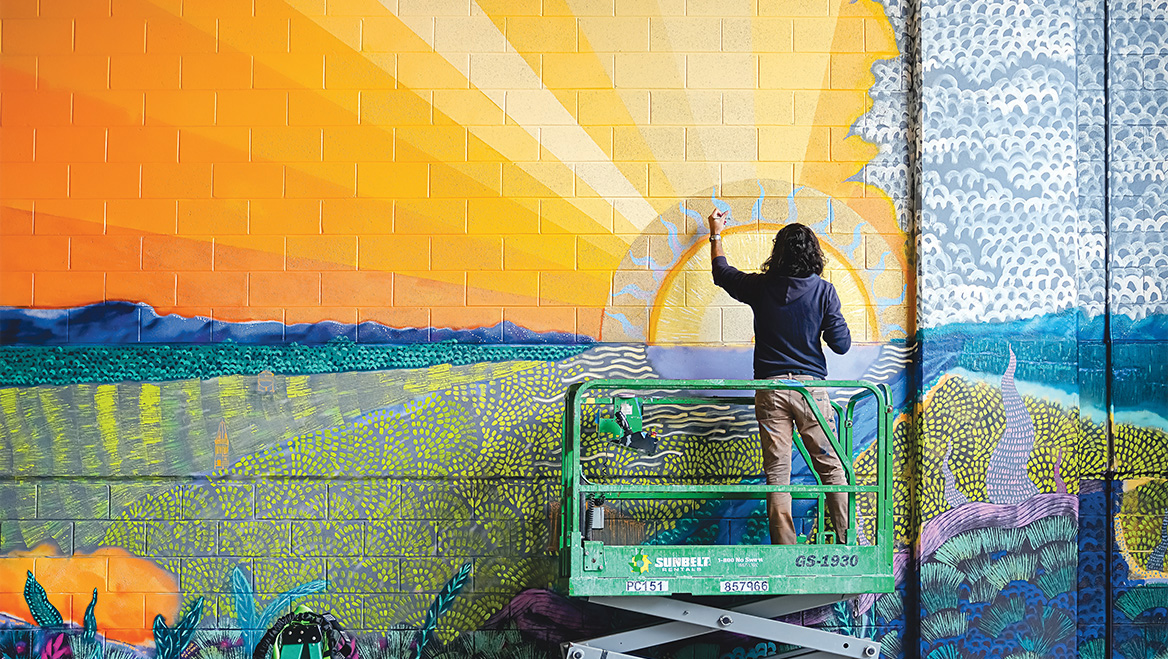
Andrea Limauro, an artist who also is a resilience planner for the D.C. Department of Energy and the Environment, created Endless Summer as one in a four-part Climate of Future Past series. Photo by Albert Ting.
Endless Summer
WASHINGTON, D.C.
The nation's capital swelters in the summer, and a changing climate is only making it worse. Near the busy, tree-less rail lines and commercial corridors of Northeastern D.C., temperatures can spike 17 degrees higher than greener parts of the city. Planner and artist Andrea Limauro's 2,000-square-foot mural Endless Summer acts as a warning about the deadliest climate phenomenon in the country, a growing danger that hits vulnerable communities the hardest. The colorful artwork, located in an airy atrium that acts as a cooling refuge near the popular Metropolitan Branch Trail, also is a vital third space. In creating a beautiful, calming place to chill (quite literally), Limauro hopes users also will consider how urban design and architecture can be part of the solution.
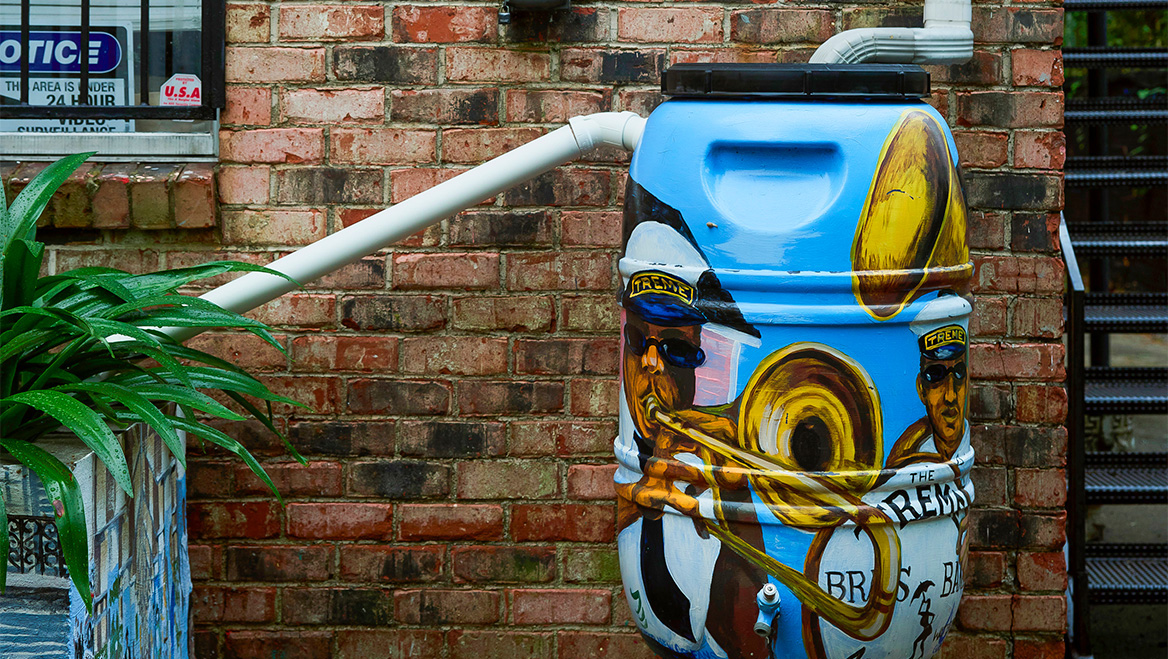
New additions outside the offices of the Greater Treme Consortium, a community group, include permeable pavers in the driveway, a bioswale, and a rain barrel. Photo by Annie Flanagan/The New York Times.
Water Wise Gulf South
NEW ORLEANS, LOUISIANA
Every drop of water that falls in New Orleans must get managed somehow. Local community groups and residents in the below-sea-level city are doing their part by identifying problem areas — like clogged drains and flooded driveways — and then Water Wise Gulf South is helping to install green infrastructure interventions to capture and slow water during heavy rain. The nonprofit collective works with groups in primarily Black neighborhoods to put in rain gardens, rain barrels, bioswales, and permeable paving at residential and business properties, churches, community centers, vacant lots, and public rights-of-way. In 2023, it reported having planted 770 trees, installed 146 rain barrels, and completed 113 other projects, providing 189,000 gallons of stormwater retention capacity.
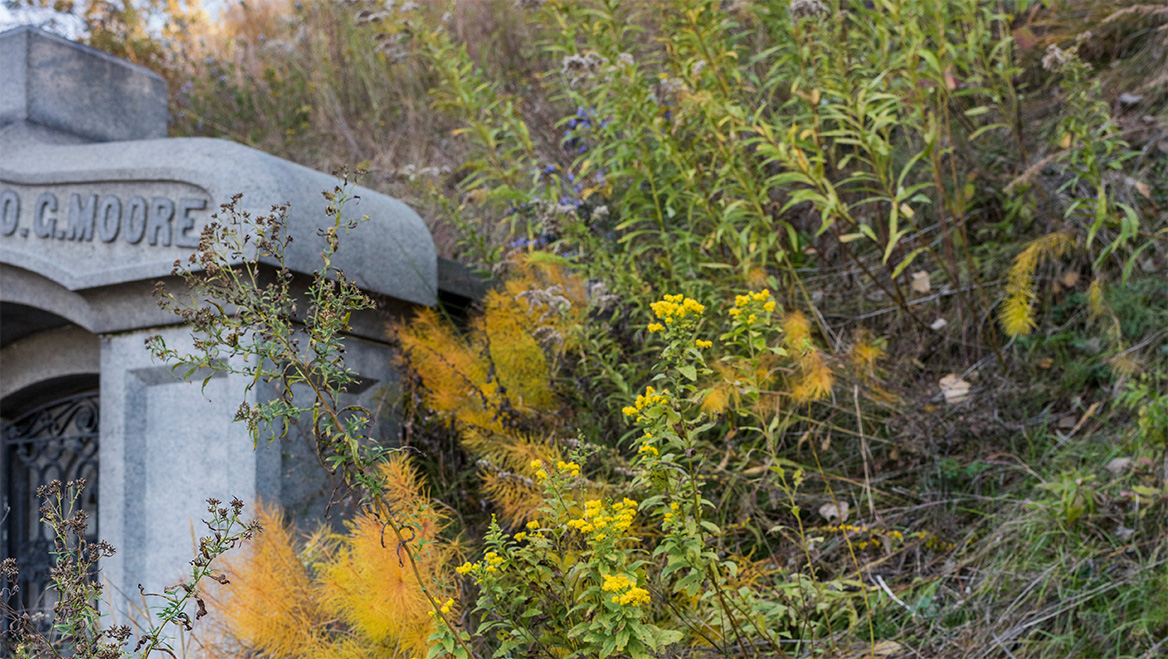
The Chapel Meadow, designed by renowned landscape architect Larry Weaner, features drought-resistant native perennials and shrubs. Photo by Valery Rizzo.
Green-Wood Cemetery
BROOKLYN, NEW YORK
A site overgrown with wildflowers — not to mention history — is eschewing the thirsty, pesticide-filled lawns of most graveyards for something more climate resilient. Years ago, cutting back on mowing the 478-acre cemetery's sleep slopes was a nonstarter, but since the COVID-19 pandemic, visitors have embraced its rewilding. Today, native plants like goldenrod, milkweed, horsemint, and white beardtongue intermingle with the magnificent 19th- and 20th-century statues and mausoleums of Leonard Bernstein, Boss Tweed, and 570,000 other souls. With 843 unique tree species and 185 species of migratory birds, this de facto wild urban park captures 264,000 pounds of carbon dioxide, removes 12,000 pounds of air pollution, and mitigates 2.6 million gallons of stormwater annually.
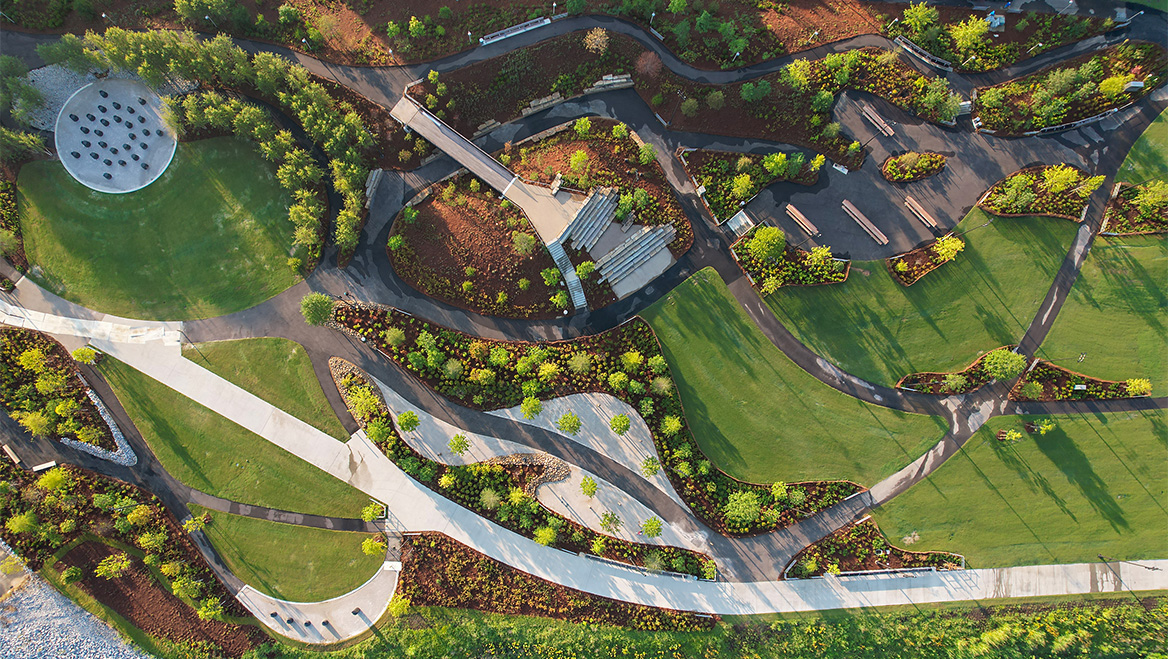
Sculpted topography frames the riverfront, while 32 functional basalt sculptures and a towering sculpture of hero Tom Lee (not shown) comprise artist Theaster Gates's Monument to Listening. Photo by SCAPE/John Donnelly.
Tom Lee Park
MEMPHIS, TENNESSEE
A once cut-off, post-industrial landscape beckons Memphians back to the Mississippi River. The 31-acre Tom Lee Park, named after a Black river worker who saved 32 people from a sinking ship, acknowledges the racist legacies from the city's past and invites open conversations about a more inclusive future. Informed by robust community engagement, the design team of Studio Gang, SCAPE, and others interweaves a river-themed playground, 71,000-square-foot lawn area, pollinator lab, performance space, and quiet contemplative spots with ecosystem restoration: replenished soil systems, more than 1,000 new trees, and native plants that support biodiversity and adaptation to a hotter, wetter environment.
RECOMMENDED ARTICLES