

Uncovering JAPA
What Federal Mandates Mean for Local Green Infrastructure
summary
- Federal mandates shape local green infrastructure planning, with stricter EPA requirements in Cleveland leading the city to integrate social and environmental justice considerations.
- Cleveland prioritized vacant land reuse, public participation, and co-benefit analyses, transforming abandoned spaces into accessible green infrastructure, while St. Louis emphasized demolition and cost-efficient, engineering-driven projects.
- Despite additional community benefits, local governments largely focus on stormwater performance and budget considerations when federal mandates do not explicitly require social or participatory elements.
Green infrastructure includes everything from naturally occurring wetlands to human-made rain gardens. The boom in these projects involves coordinated effort from federal and local governments.
In "From Mandates to Outcomes: How Federal Policies Shape Local Green Infrastructure Planning and Implementation" (Journal of the American Planning Association, Vol. 92, No. 1), Chaeri Kim uses a comparative case study of two sewer districts to examine how federal enforcement shapes local planning. The study follows the effects to understand how local governments respond to compliance actions.
Comparing Cities in the Post-Industrial Midwest
The Northeast Ohio Regional Sewer District in Cleveland, Ohio, faced the most detailed and prescriptive requirements in the federal government's 2010 consent decree. The Metropolitan St. Louis Sewer District in Missouri faced the least stringent requirements in its 2012 consent decree. These sewer districts serve more than one million people each in postindustrial cities with aging infrastructure.
Contrasting these two cases allows Kim to assess the local effects of federal mandates and to compare the implementation a decade later. She looked back and forth between the green infrastructure provisions in each case's consent decree and the resulting green infrastructure plans from the local government.
This document comparison was complemented with 17 interviews with program managers and directors at the EPA, state agencies, and local governments. Finally, Kim checked in on 253 green infrastructure projects more than a decade later using Google Street View.
Demolition in St. Louis
In St. Louis, the reviewed planning documents pair green infrastructure with redevelopment planning. More than 50 percent of the pilot budget was allocated to demolition projects. These two strategies aligned, as the city largely relied on demolishing uninhabitable properties to create grassy lots, which reduces runoff.
These projects often were left empty with only signage and no other visible features like benches or sidewalk improvements. While demolition was a cost-effective approach, poor site maintenance can reduce the meaningful benefits for communities.
The consent decree for St. Louis does not mention any mandates related to the planning process or corrective actions, aside from a requirement to invest in pilot projects. The St. Louis sewer district focused on testing the performance of each type of green infrastructure project and associated costs. The approach remained largely within a traditional engineering framework, treating green infrastructure as complementary to gray infrastructure.
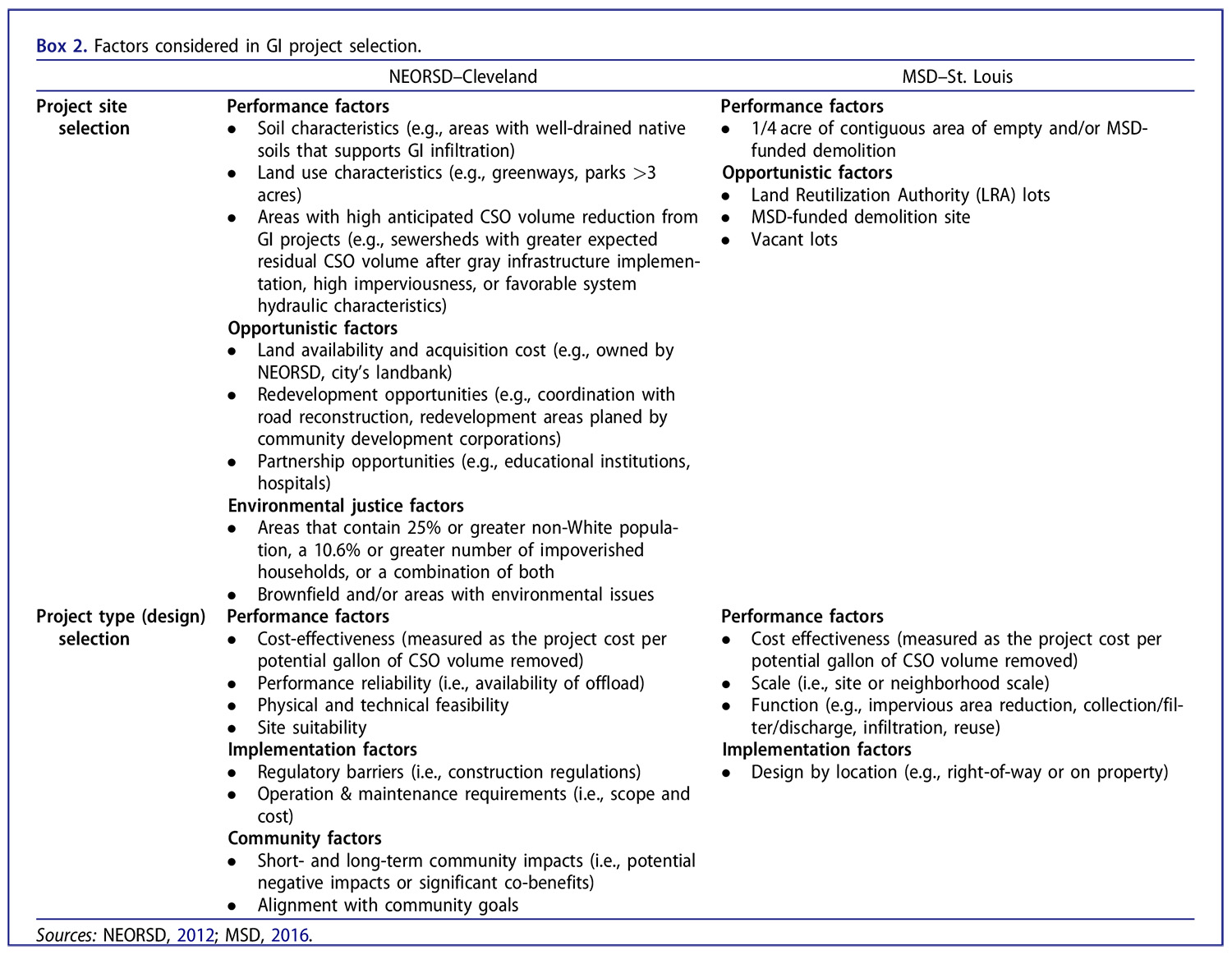
Box 2: Factors analyzed in the mandated interim reports. (Credit: author)
In contrast to St. Louis, social dimensions were incorporated into the planning and implementation of green infrastructure in Cleveland. The sewer district created a detailed green infrastructure plan in its negotiations with the EPA. This included environmental justice considerations in site selection and a public participation process. Interview participants noted federal involvement due to an EPA office in Cleveland and sewer district leadership's strong support for green infrastructure.
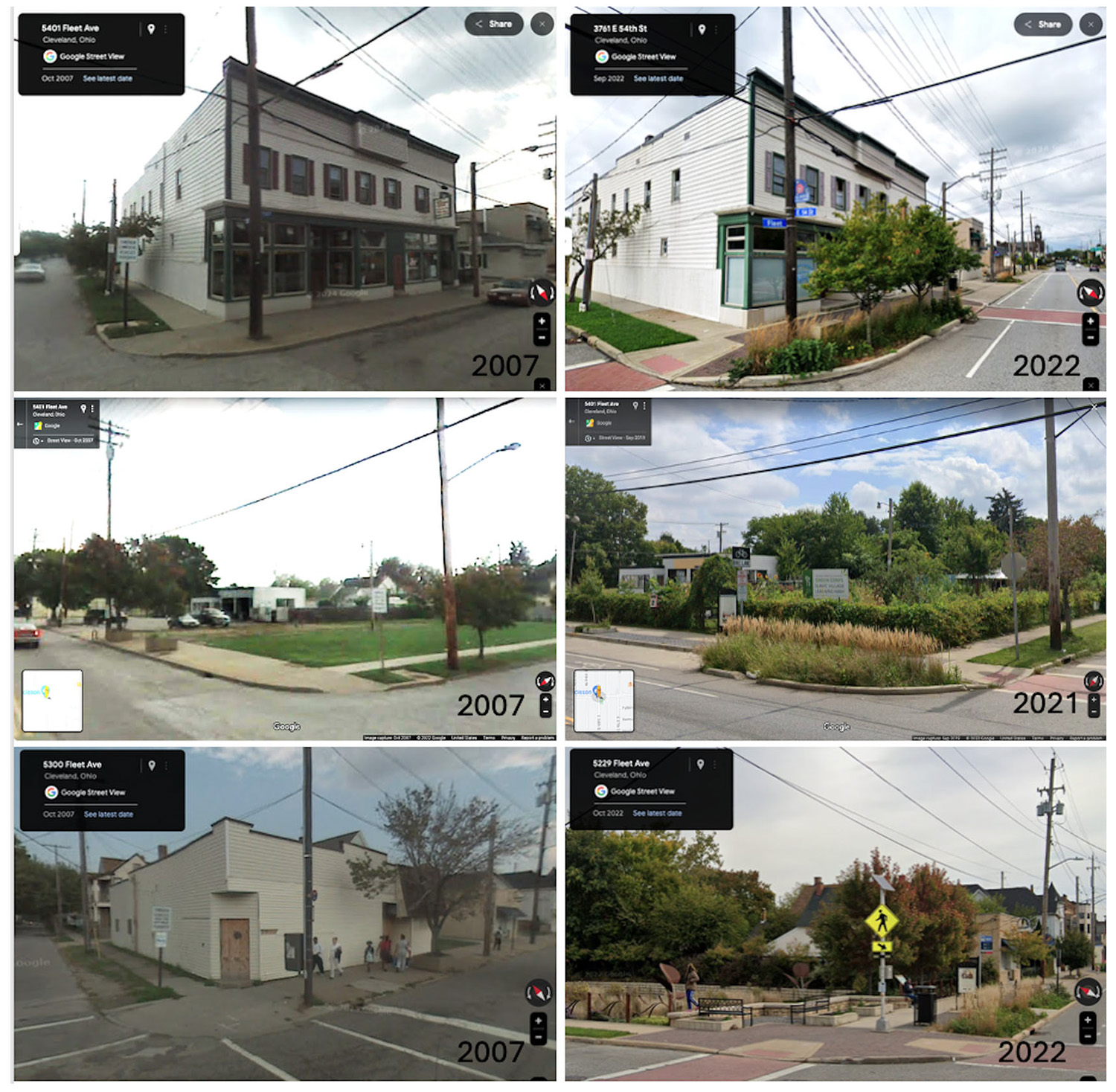
The sewer district prioritized sites with opportunities for vacant land reuse and community redevelopment, classifying these factors as environmental justice considerations. They conducted a co-benefit analysis to measure the number and demographics of vulnerable populations within walking distance. The district converted abandoned structures and illegal dumping sites into public open spaces.
These sorts of community-facing projects were new to the Northeast Ohio Regional Sewer District, which typically focuses on underground work. The district ran into unexpected costs during implementation, including site contamination remediation, additional roadway work, property acquisition, long-term operation and maintenance, and unanticipated rebuilding needs.
The district's projects were relatively large in scale, provided new park spaces, and were situated in low-income neighborhoods. These combined project characteristics have been linked to increased green gentrification pressures. Interviewees acknowledged the risks but emphasized the importance of removing environmental hazards and improving stormwater management.
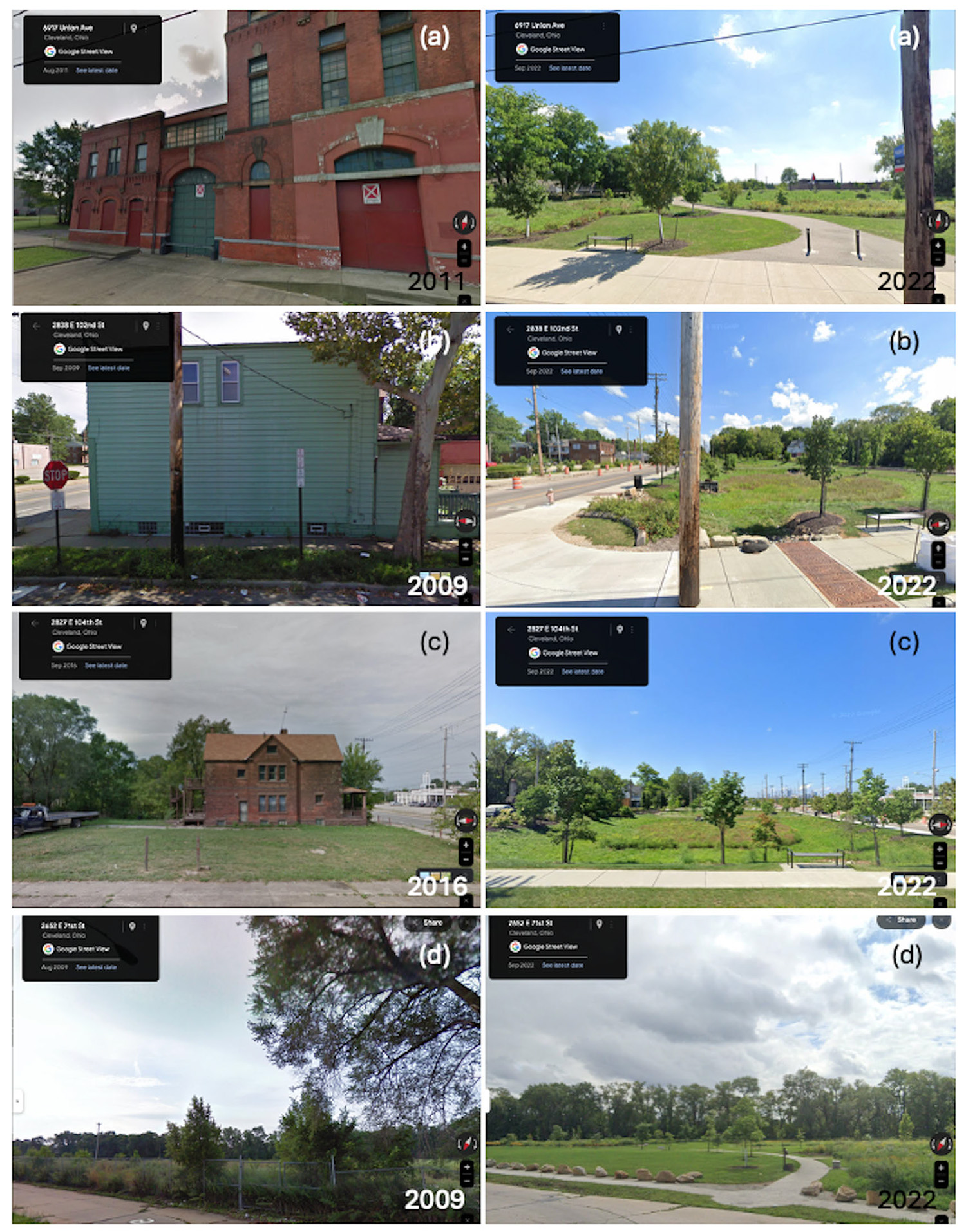
Figure 2: Street-level views of Cleveland's green infrastructure projects that transformed abandoned structures into public open spaces. (Credit: Google Street View, compiled by author)
While researchers praise the positive side effects of green infrastructure beyond just improved stormwater, Kim's study suggests that stormwater performance and cost remain the primary metrics for projects. Without explicit mandates to incorporate social factors into site selection, local governments largely planned as if the projects were traditional gray infrastructure.
Top image: Photo by iStock/Getty Images Plus/ lakefx
ABOUT THE AUTHOR