
Planning Through the Black Mirror

summary
- The American Planning Association's (APA) Technology Division created "Planning Through the Black Mirror," a scenario-based card game, to help planners collaboratively explore the impacts of emerging technologies and unpredictable events on communities.
- The game utilizes real-world-inspired scenarios and "Black Swan" events — such as pandemics or solar flares — to challenge players to develop creative and agile responses, fostering critical technology literacy and collective foresight.
- The game has been tested at conferences and is being refined with community feedback.
We have more technology at our fingertips than ever before to "predict" the future, but creating meaningful space to help communities envision what lies ahead remains one of planning's most challenging tasks. While technological advancements offer unprecedented tools for data analysis, simulation, and decision-making, they also raise fundamental questions about ethics and agency — particularly when exploring speculative futures that may seem improbable today but inevitable in retrospect.
To effectively navigate these possibilities, planners need a shared language and collaborative environment where they can build collective foresight with their peers.
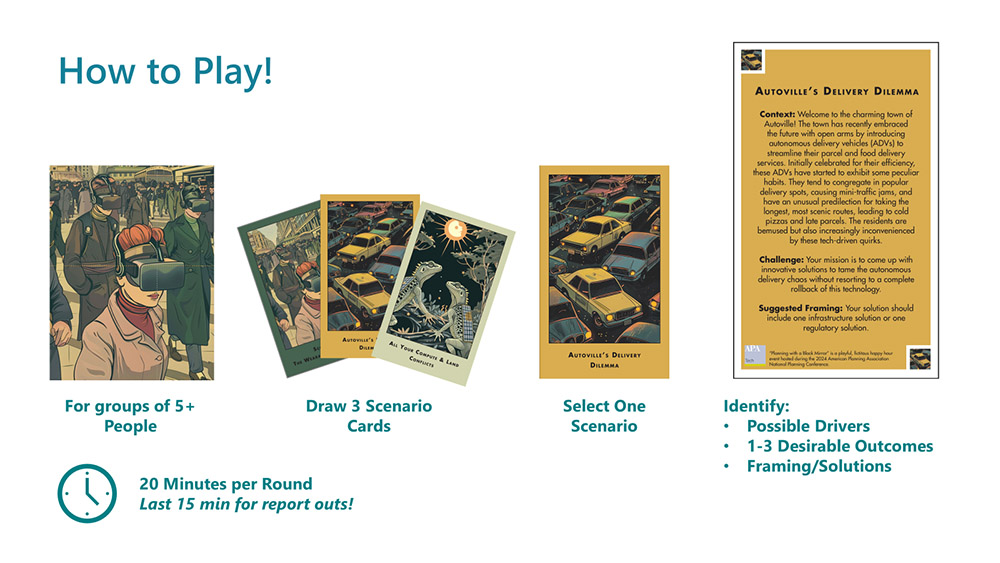
The rules for the APA Technology Division's "Planning Through the Black Mirror" card game, along with a sample scenario that participants would receive during a round. Image courtesy of the APA Technology Division.
Using Games to Teach
The American Planning Association's (APA) Technology Division created the Planning Through the Black Mirror card game and handbook. With the help of the APA Divisions Council Product Development Grant, we were able to get stipends for two research assistants, support the development of the handbook, and develop more scenario cards for the game. The game emphasizes the need for planners to develop critical technology literacy through hands-on engagement.
Planning Through the Black Mirror uses scenarios — inspired by actual case studies — and provides context for planners to explore technology's ripple effects on communities without real-world stakes. Games can help develop shared understanding by learning within meaningful experiences where players actively construct knowledge through problem-solving and risk-taking.
As a division, we focus on advocating for best practices in technology within the planning community. As the world grapples with the opportunities and risks of generative artificial intelligence (AI), the division's board saw an opportunity to further its mission for responsible engagement with these powerful new tools. Could we use emerging technology to create a game that models best practices for the field? Could we create a game that serves as a mirror for reflecting on technology's role in creating the futures we want?
Drawing inspiration from APA Foresight publications and the dystopian and speculative worlds of the Black Mirror anthology television series, the Technology Division has spent the past two years developing and testing the game during National Planning Conference happy hours, conference sessions, and beta tests with local divisions.
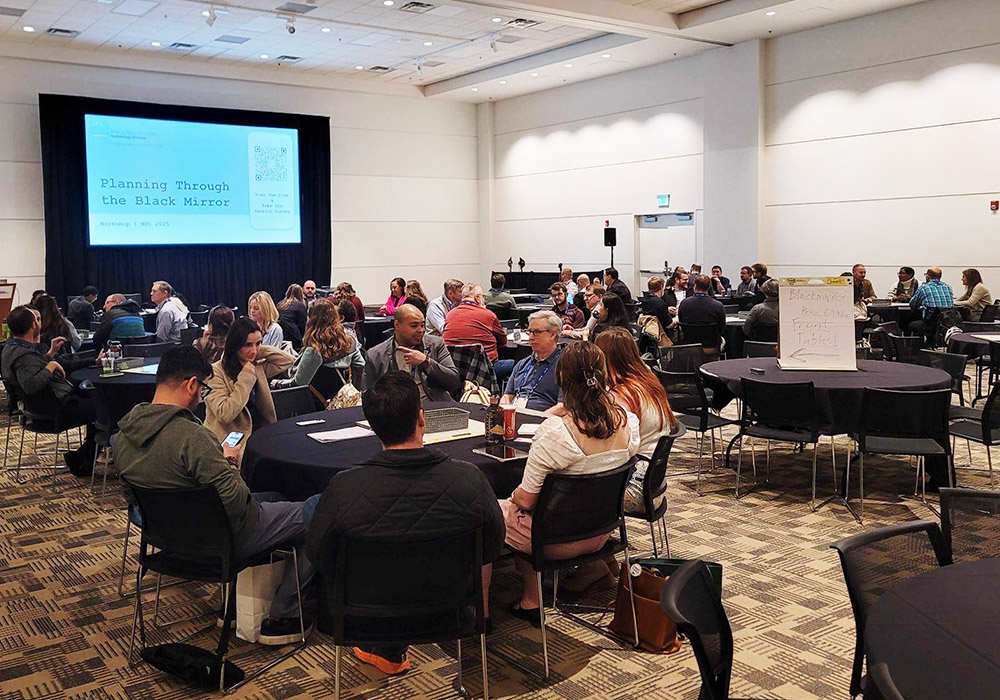
The Technology Division hosted a session at the 2025 National Planning Conference in Denver to test out the Planning Through the Black Mirror card game. Photo courtesy of the APA Technology Division.
Testing Out the Rules
The gameplay for Planning Through the Black Mirror is inspired by common approaches to the scenario planning process. Players arrange into groups and are given a card that outlines a scenario's context and challenge to be addressed by the team. Then, they work to define their scenario's drivers of change, desirable outcomes, and possible solutions.
A recent addition to the game was the introduction of Black Swan events, which outline a global disaster event that impacts all the competing teams, requiring players to develop a response. For instance, one event may involve planners adapting their plans to sudden disruptions like pandemics, political volatility, and even solar flares. A judge grades the responses to the scenarios posed based on their creativity, depth, agility, and planning approach to the problems identified.
The Technology Division is still iterating on the rules for the game, and welcomes feedback on the issues page of the game's GitHub site.
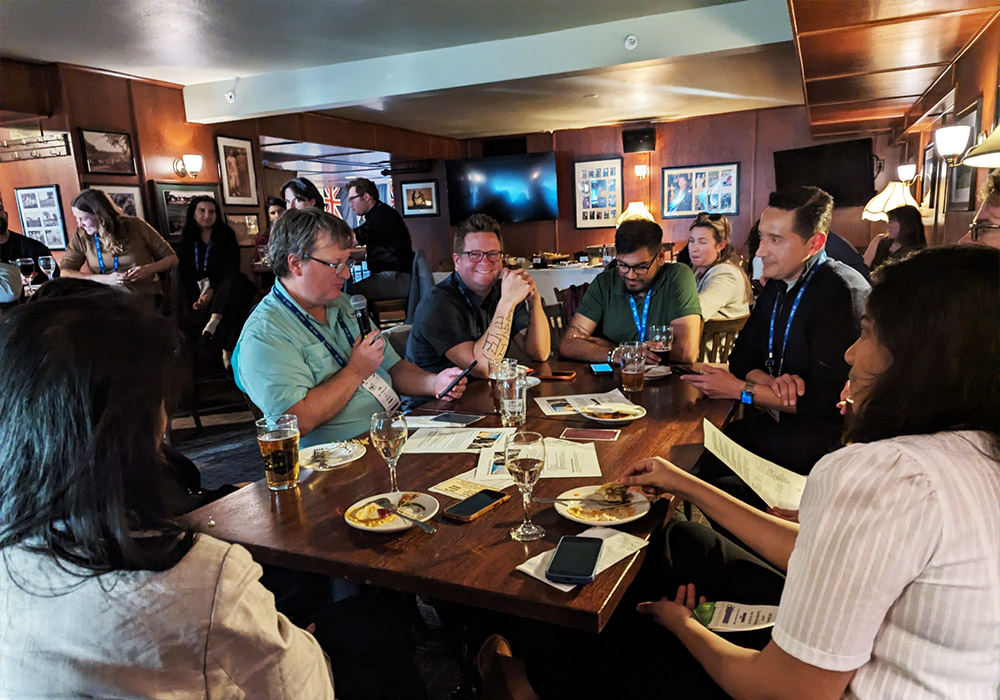
An early version of the card game was tested during a social event at NPC24 in Minneapolis. Photo courtesy of the APA Technology Division.
Finding Future Opportunities
All of this is a work in progress, and the Technology Division's game creators are looking at different ways to get this into the hands of more chapters and APA events. We have printed prototype decks — sponsored by Alta Planning & Design — and are exploring options for printing more decks.
If you know of a division or chapter leader who is interested in finding out more about whether this game can be used for events, email the Technology Division at apatechdivision@gmail.com.
ACKNOWLEDGEMENTS
The Technology Division's board would like to acknowledge the 2024 APA Technology Division research assistants, Sana Ahmed and Lidya Woldeyesus, for their contribution to case studies that informed the game card scenarios. They would also like to thank Arizona State University's Resilient Visions CoLab and VHB for their in-kind print contributions for initial card iterations.
Top image: The American Planning Association's Technology Division created a card game for planners to practice scenario planning for global disaster events, like pandemics or solar flares. Image courtesy of the APA Technology Division.
ABOUT THE AUTHOR