
2025: The Year Housing Took Center Stage in Congress
In a year full of division and difficulty, housing found a bipartisan spotlight.

summary
- In 2025, housing emerged as a unifying issue amid political division, with significant advocacy efforts leading to bipartisan progress on federal housing legislation and funding despite challenges in the planning profession.
- The Senate's ROAD to Housing Act and the House's Housing for the 21st Century Act advanced with strong bipartisan support, incorporating key planning priorities such as zoning reform, expedited permitting, and affordability measures.
- The administration and Congress have declared housing affordability a key focus for 2026, with anticipated legislative action on housing bills and related transportation funding.
Throughout 2025, the American Planning Association (APA) fought hard for pro-planning positions in a challenging environment, pushing against the trajectory and polarization that has taken hold of Washington. In a Congress so divided, APA and partner organizations looked for pockets of common ground to push a housing agenda forward at the federal, state, and local levels.
APA advocates faced this challenging year head-on, speaking to Congress, administration officials, and local leaders with drive and perseverance. They shared on-the-ground stories of the impact of the housing crisis and insights into planning-led solutions and zoning reform trends in their communities. APA's 2025 Online Planners' Day and Congressional Fly-In allowed advocates to not only highlight the value of planning but also the need for zoning reform.
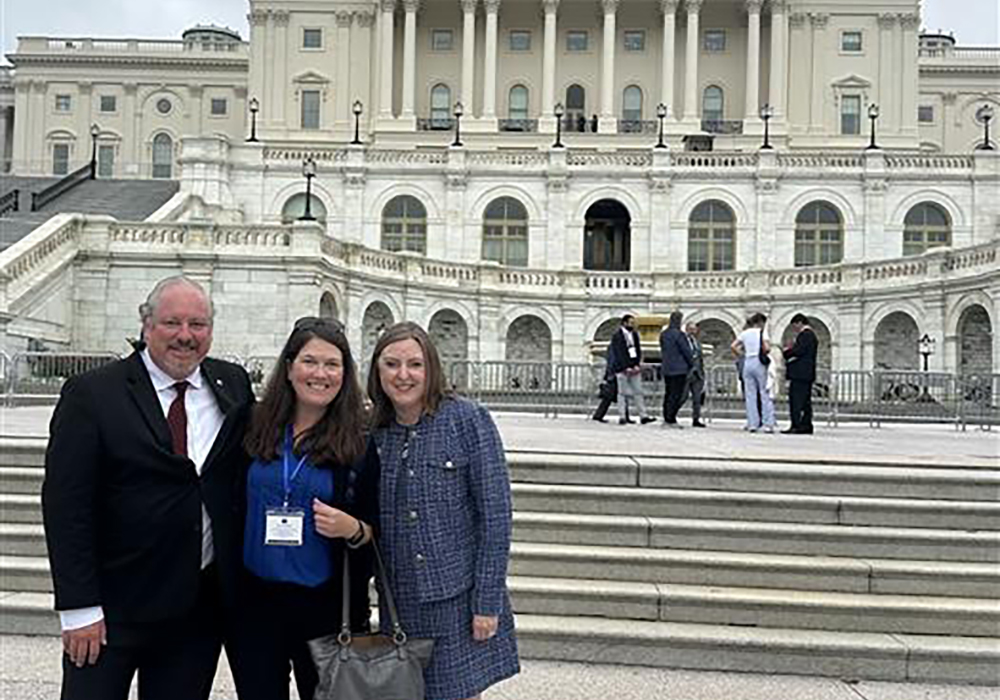
Planning advocates (left to right) Charles Bloom, AICP, Allison Mouch, AICP, and Sara Copeland, FAICP, on Capitol Hill to meet with members of Congress.
With funding uncertainty, grant clawbacks, federal staff reductions, and new regulations causing stress and overwhelm throughout the planning profession, APA has worked to defend core planning principles and programs while providing members with the support and resources they need to navigate the shifting environment.
Standing up for planning values, pushing back against threats to the profession, and highlighting key issues like attainable housing and affordability paved the way for the introduction of monumental pieces of comprehensive housing legislation this past year.
Navigating the Federal Landscape
Resources for Shifting Federal Policy Landscape
The resource hub is a one-stop location for the latest federal policy updates that will impact planning, policy analysis, and tools to help continue the important planning work our communities need.
Historic Housing Packages Create Path for Victory
Both the Senate's Renewing Opportunities in the American Dream (ROAD) to Housing Act and the House's Housing for the 21st Century Act are high on Congress's radar for early 2026. Congress and the White House are eager to move both bills forward, and the work of housing advocates to get those bills where they are today is the true victory of 2025.
The unanimous passage of the ROAD to Housing Act out of the Senate Banking Committee marked an important victory in bipartisan action on housing. Complete support across both sides of the aisle, thanks to the advocacy of planners, signals growing federal support for housing reforms nationwide.
In the other chamber, the House Financial Services Committee advanced the Housing for the 21st Century Act, following a similar path to the Senate Banking Committee. While some key provisions differ between the two bills, many APA top priorities are in both packages.
Some of these priorities include:
- Develop best practices, policy frameworks, and models of development to be used at the local and state level.
- Promote public transit projects and increase economic opportunity and access between cities, the suburbs, and rural areas by reforming housing and zoning policies.
- Expedite the permitting process to create pre-approved plans for targeted housing types, including accessory dwelling units and "missing middle" builds
- Fund and finance adaptive reuse and commercial conversions
- Promote housing tools and models
- Reform rural housing programs
- Streamline and modify environmental reviews
- Promote modular housing
- Improve affordability and remove regulatory roadblocks
- Increase and prioritize affordability
House leaders hope to have the bill on the House floor in January. In addition to securing time for a floor vote in the House, the differences between the ROAD to Housing Act and the Housing for the 21st Century Act will have to be negotiated and reconciled before final passage.
The biggest takeaway? Bipartisan congressional support is overwhelming, and there are now two broad pieces of legislation on the table that contain APA housing priorities moving into 2026.
Looming Budget Wins for Housing Programs
The tax reconciliation legislation, One Big Beautiful Bill Act (OBBB), maintained and expanded key housing programs in the Fiscal Year 2026 budget.
The win came in the expansion of the Low-Income Housing Tax Credit (LIHTC) by 12 percent and the extension and improvement of opportunity zones by permanently authorizing the incentive. The tax bill also permanently extended the New Market Tax Credit, expanding an economic development tool critical to planners nationwide. However, the bill was controversial and included cuts to some key domestic programs, negatively affecting millions of people across the country. It is important to note that because the bill was passed using reconciliation, it was adopted on a "party-line basis" in a tightly controlled process.
Planners and advocates are playing the waiting game when it comes to the Department of Transportation and the Department of Housing and Urban Development's appropriations package (THUD). A continuing resolution adopted to end a record-setting government shutdown is set to expire by the end of January. Without the passage of an appropriations bill, funding will be cut off for these departments. The administration proposed the elimination of funding for key programs, but experts and advocates are hopeful that programs critical for housing development will remain in the bill, including funding for Pathways for Removing Obstacles to Housing (PRO Housing) grant program and support for vital tools such as Community Development Block Grants (CDBG), the HOME program, and Choice Neighborhoods.
The overall environment for federal funding remains challenging. But thanks to the advocacy of planning professionals, there is bipartisan support for rejecting the biggest cuts in the final appropriations package.
Housing is THE Priority for 2026
The Trump administration has made it clear that housing affordability is a priority this year. While we wait for the White House to announce specific details of their "aggressive housing reform plans," Congress is just as eager to get a jumpstart on the action. We should see movement on key housing bills as soon as the middle of January. It is also worth noting that the Surface Transportation bill will be up for reauthorization in 2026, allowing advocates to speak on the key connections between housing and transportation this year.
This type of comprehensive approach to tackling the housing crisis has not been feasible for decades. Now, momentum is high, and the desire for action is strong to continue advancing housing legislation in 2026. Housing is bringing Congress, the White House, and the nation together — and that is the biggest victory of all.
Stay up to date on the latest in federal housing and zoning reform news by joining the Planners' Advocacy Network, your source for federal action you can take NOW.
Stay Up To Date On Federal Action
PLANNERS' ADVOCACY NETWORK
Become a member of the Planners' Advocacy Network to stay up to date on federal action and receive opportunities on how you can get involved.
Top Image: iStock/Getty Images - benedek