

Equity in Practice
Refashioning a Commercial Corridor in Detroit
summary
- Detroit's Livernois Avenue, known as the Avenue of Fashion, through the 1960s was one of the city's busiest shopping districts, known primarily for its Black-owned businesses.
- Economic challenges and a decline in foot traffic negatively impacted the corridor where vehicle movement was prioritized over pedestrian safety.
- The Livernois-McNichols Neighborhood Framework Plan identified ways to improve the pedestrian experience, enhance local business, and build on the corridor's unique identity as a historic retail and cultural destination.
In the late 1950s, a mile stretch of Detroit's Livernois Avenue became known as the Avenue of Fashion, a retail corridor for high-end garments, specialty goods, and services. Through the 1960s, this commercial strip was one of the city's busiest shopping districts, known primarily for its Black-owned businesses. During this period, artists such as Marvin Gaye lived within blocks of the vibrant corridor, contributing to the area's cultural significance.
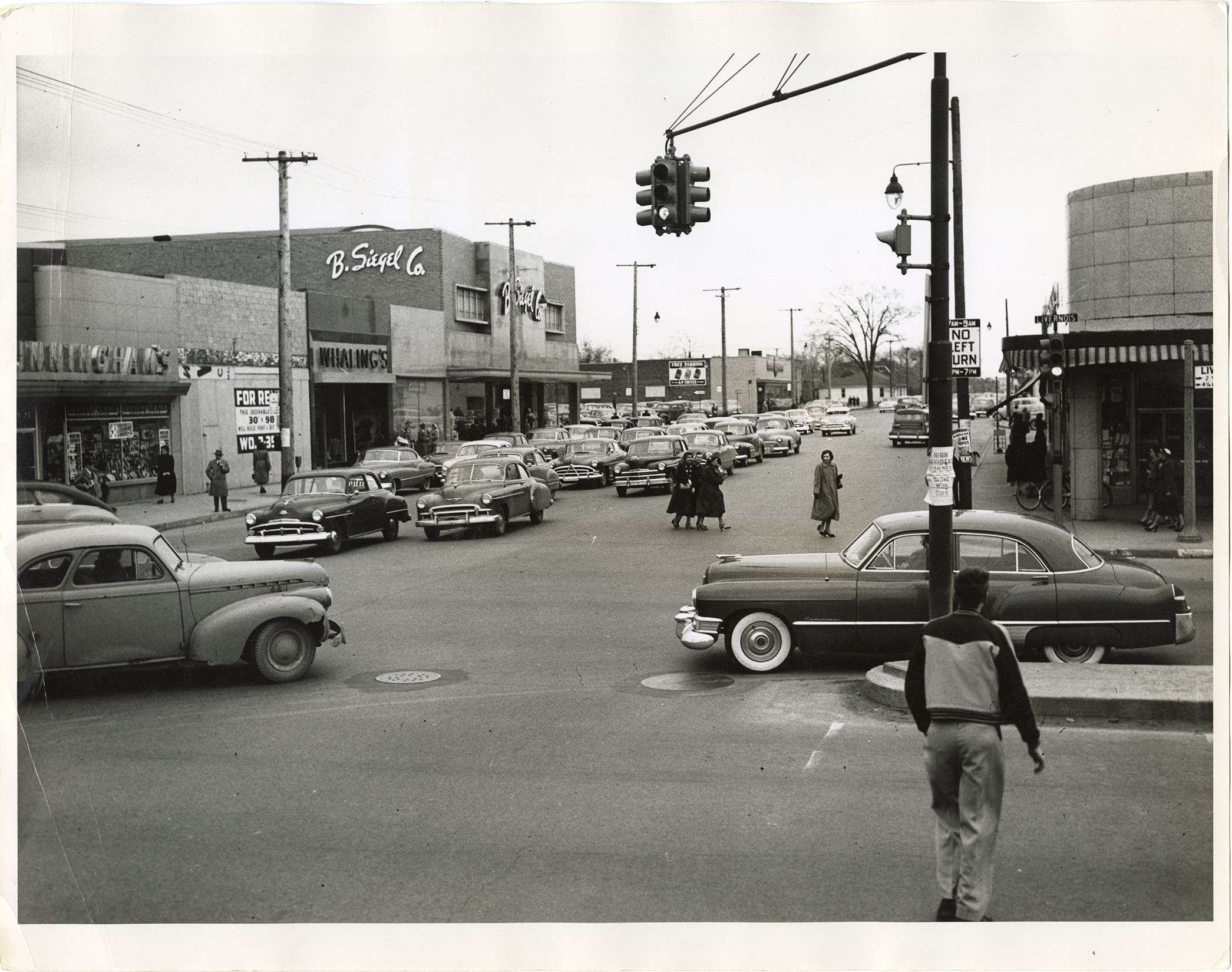
View looking west on Seven Mile Road from the northeast corner on Saturday, April 14, 1951. Detroit Planning Commission, photo by Harold Raymond. Part of the Detroit Public Library's Burton Historical Collection.
Community Problem
The rise of suburban shopping malls in the late twentieth century led to a decline in foot traffic on Livernois Avenue and loss of investment. Shops closed their doors, and by the early 21st century, only a fraction of businesses remained. The Great Recession and, more recently, the COVID-19 pandemic, dealt further blows to many small businesses along the corridor, deepening long-standing economic challenges and pushing the Avenue of Fashion into decline.
In addition to economic challenges, the street's limited physical design impeded foot traffic, further impacting the area. Its outdated roadway design and narrow sidewalks prioritized vehicle movement, rather than pedestrian safety and comfort. The environment encouraged drivers to pass through the corridor rather than slow down and stop, and offered little visual or physical invitation for people to walk along the Avenue of Fashion.
Reinvigorating the Avenue of Fashion demanded more than retail investment; it required reimagining it as a place for people rather than simply a route for vehicles. The City of Detroit recognized that restoring the corridor's economic vitality depended on creating a streetscape where visitors felt comfortable slowing down, walking, gathering, and engaging with local businesses.
With its deep cultural legacy and long history as a center of Black entrepreneurship, Livernois Avenue presented an opportunity to align public infrastructure investment with community identity, using street design as a catalyst to support local commerce, celebrate culture, and reconnect the Avenue of Fashion to its surrounding neighborhoods.
Planning Solution
Detroit's citywide Streetscape Program, part of the city's Complete Streets initiative, began in the late 2010s as a coordinated effort to improve commercial corridors across the city through pedestrian-friendly design, safety features, and infrastructure upgrades. Rather than a conventional road improvement project, the planning strategy focused on reshaping the street's physical structure to support everyday activity and economic life.
The Livernois Avenue Streetscape Project began in early 2019. The project set "an important precedent for how Detroit would approach corridor redesign through community engagement, transparency, and partnership," states Kim Tandy, project manager for the City of Detroit's Planning and Development Department. The project was part of the larger Livernois–McNichols Neighborhood Framework Plan, developed through meetings with residents, business owners, and local stakeholders to identify priorities for improving commercial corridors such as Livernois. The framework included improving the pedestrian experience, enhancing local businesses, and building on the corridor's unique identity as a historic retail and cultural destination.
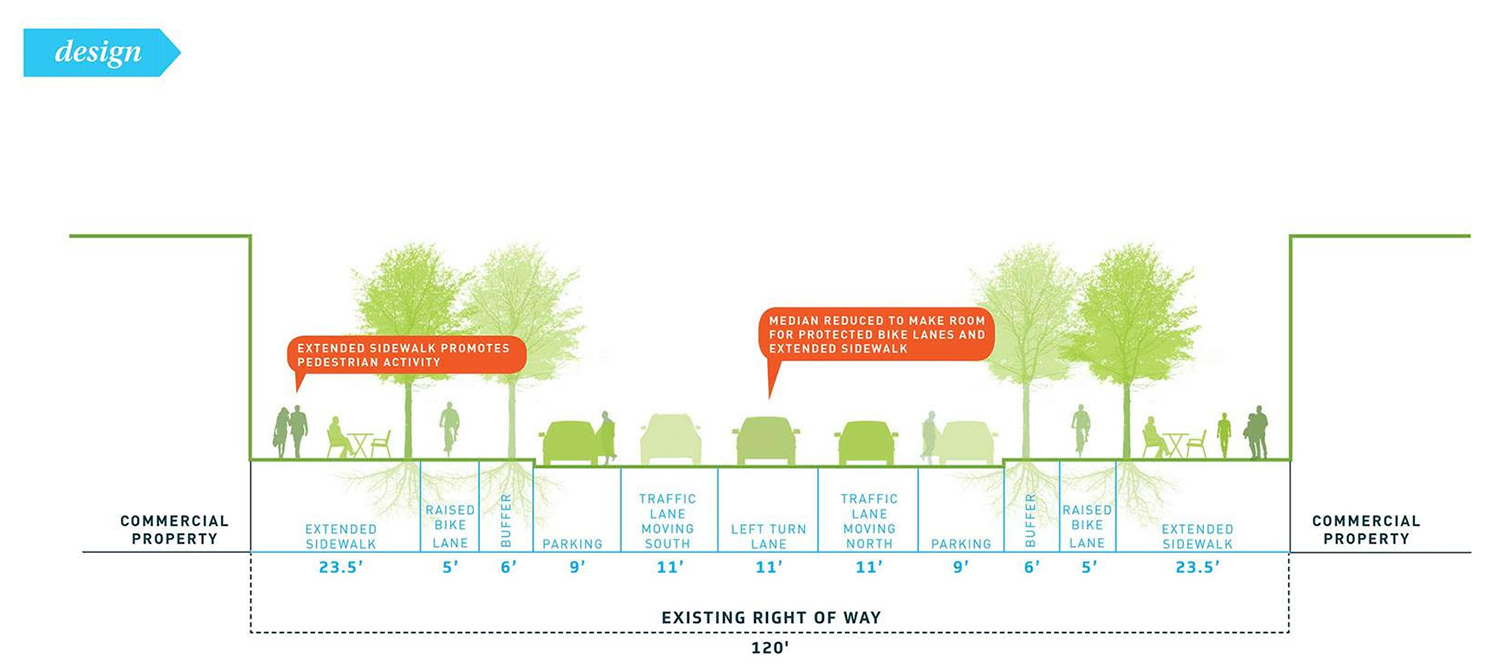
Rendering of Avenue of Fashion streetscape improvements. Image provided courtesy of City of Detroit Planning and Development Department.
"Community engagement was central to the project from the beginning," Tandy says. "Prior to, during, and following construction, the city hosted more than 50 community meetings to gather input, share design concepts, and respond to community concerns."
As part of the project, vehicle lanes were reduced to calm traffic and improve safety by removing the existing center median and replacing it with a dedicated left-turn lane, making it easier for drivers to reach businesses along the corridor. Sidewalks were significantly widened, creating space for outdoor seating, street life, and greater pedestrian movement. Sidewalk-level bike lanes were added to provide a visible and protected space for people traveling by bicycle. Beyond surface changes, the project included substantial infrastructure upgrades, including new pavement, lighting, landscaping, and underground utilities.
"During construction, the city continued its hands-on approach by hosting monthly in-person update meetings with corridor businesses, often held at a local business, to provide consistent communication and address real-time challenges," Tandy says. Additionally, "the city, in partnership with the Detroit Economic Growth Corporation (DEGC), worked with businesses both individually and collectively to support marketing efforts and address financial concerns. These coordinated efforts were intentionally designed to help businesses remain open, visible, and resilient during construction, and to position them for long-term success afterward."
Outcome
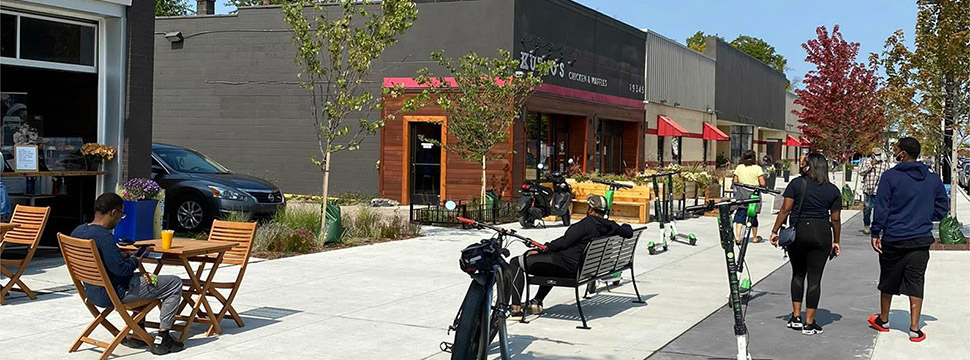
Streetscape construction on the Avenue of Fashion was completed in the Fall of 2020, reshaping how people use Livernois Avenue. Its wide sidewalks, improved lighting, bike lanes, and landscaping have created an inviting space for visitors and community members to walk the corridor and spend time outside. The effort has also been a boon for small businesses: new restaurants, specialty shops, and service providers have opened or expanded, preserving the Avenue of Fashion's place as one of the largest shopping districts of Black-owned businesses in the country.
The project's success laid the groundwork for additional investment and expanded planning efforts in the Livernois area. In January 2026, the Michigan Economic Development Corporation awarded the City of Detroit a $4.3 million Michigan Talent Partnership grant to support the Livernois Streetscape Extension, a proposed effort to extend the corridor's economic reach by improving connectivity to nearby institutions and employment centers. While the extension is not yet constructed, the funding demonstrates confidence in the streetscape's ability to support future economic growth. The extension also emphasizes the area's importance to the people who live, work, and do business nearby.
(Above: Detroit PBS story about the history of the Avenue of Fashion)
Considerations for Your Community
Detroit's Avenue of Fashion is a strong example of how a successful commercial corridor revitalization depends as much on process and people as on physical design. Long-time entrepreneurs on Livernois kept the story of the Avenue of Fashion alive through decades of decline, and their perspectives grounded the planning work in local identity and economic aspiration.
Communities considering similar streetscape investments may find that pairing roadway redesign with ongoing community engagement, coordinated business support, and attention to local identity helps strengthen long-term economic and social outcomes. By involving residents and business owners before, during, and after construction, the city was able to actively address concerns, adapt communication strategies, and build trust throughout a disruptive construction process.
The project also highlights the importance of designing streets for everyday use by residents, not solely for destination visitors. Wider sidewalks, safer crossings, and comfortable public spaces encouraged people to slow down, walk, and spend time along the corridor. These design choices support both economic activity and quality of life.
Finally, Detroit's approach demonstrates how initial infrastructure investments can create future planning and funding opportunities. The funding awarded for the Livernois Streetscape Extension reflects the value of treating streetscape projects as part of a longer-term strategy rather than a standalone improvement. Together, these lessons show how thoughtful, community-focused streetscape investments can strengthen commercial corridors, uplift culture and legacy, and encourage connection.
Top image: View down Livernois Avenue following streetscape enhancements. Image provided courtesy of City of Detroit Planning and Development Department.
About the author