
From Kitchen Tables to City Hall: Making Planning Accessible and Personal in Danville
The story of PLAN Danville's women-led approach.
summary
- A predominantly women-led team from Danville, Virginia, oversaw PLAN Danville, the city's comprehensive plan, in 2024, with a focus on enhanced community engagement.
- Engagement efforts include early-morning and after-school meetings, volunteer opportunities, and "kitchen table talks" to ensure the plan is accessible to residents of all ages and literacy levels.
- PLAN Danville implementation continues through scorecards, events, and zoning updates aligned with community priorities.
Sitting on Kendra Hyson's desk is a pen that reads, "Nevertheless, she persisted."
Hyson, a project manager for SmithGroup, which served as the primary consulting firm for Danville, Virginia's comprehensive plan in 2024, never imagined the saying would become an informal mantra for the planning team. "I observed the incredible efforts of the women on our team, especially those who were juggling being parents and partners, in this effort," she says.
While not intentional, the group was a predominantly women-led leadership team, a dynamic that shaped both the process and the outcome of the plan. "We knew we would have to go the extra mile, be sensitive to past failures and experiences, and take all of that into consideration as we had these conversations," adds Renee Burton, Danville's director of planning and zoning.
Making a Connection with Danville
Burton says that early on, the team leaders recognized the need to take on unique responsibilities, such as decorating a storefront they set up to help residents learn more about the plan. She says this "home base" created an atmosphere for engagement that helped build genuine relationships with the community outside of normal business hours. "Everyone took on this can-do attitude," she says.
With that goal in mind, the team also increased its community engagement efforts. Recognizing a lack of prior outreach to working mothers due to their busy schedules, they bridged the gap by connecting with school groups and parent networks in the community, meeting with them early in the morning or after school to hear their concerns.
Burton often brought her own children and partner to community events, showcasing her belief that planning is both civic and deeply personal. "They were very supportive in volunteering at stations and at clean up," she says of her family pitching in. "They were greeters at one event and really enjoyed decorating the storefront."
This approach was also extended to their engagement efforts with other groups, including visits to community high schools and retirement homes. Hyson says the students, frequently overlooked because they cannot vote on public matters, expressed concerns about housing costs and rent issues shaping their immediate futures. At the same time, older residents, who are often sidelined because they may not see a plan's long-term implementation, voiced concerns about their grandchildren's well-being.
"We also provided volunteer opportunities at our block party events for students where they were given food vouchers to local restaurants," Burton adds. "We did everything we could to try and meet people where they were and ensure that we provided some level of support to incentivize engagement and support the community."
Kitchen table talks
The team also explored accessible ways to get feedback from community members with lower literacy levels, says Catherine Clarke, AICP, a planner at SmithGroup. One way was through their "kitchen table talks"—a method rooted in the simple principle that if a planning concept could not be explained clearly in a casual kitchen conversation, it needed to be rethought. This approach influenced everything from meeting formats to written materials and became a cornerstone of the plan.
Technical language was stripped back, acronyms were avoided, and graphics and visuals were given equal weight to text. The team's accessibility efforts also extended to staff. When they learned that a colleague was red colorblind, the team revisited the plan's visual design by adjusting color contrasts, increasing font sizes well beyond the standard nine-point type, and developing a visual key to ensure clarity for all readers.
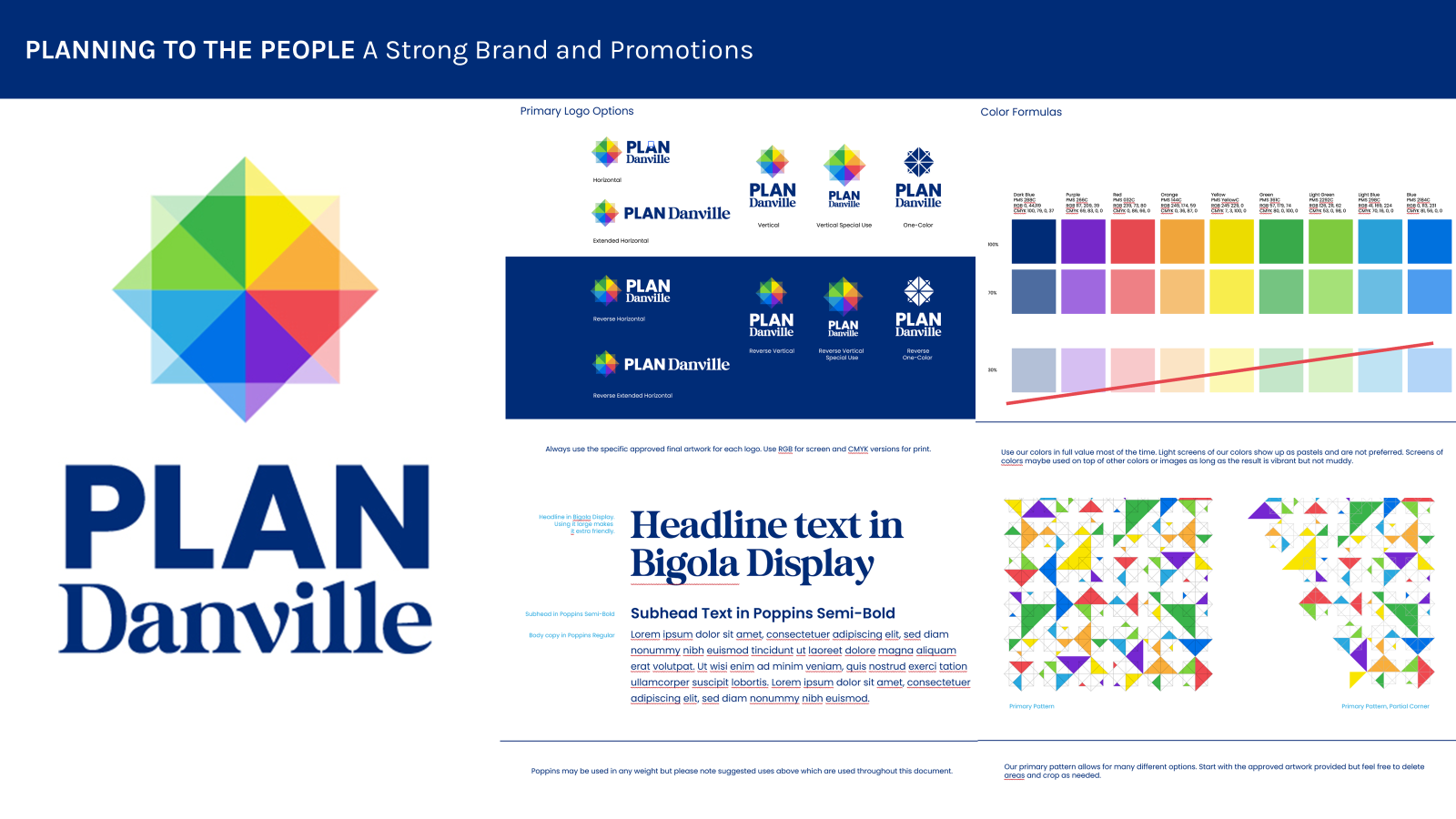
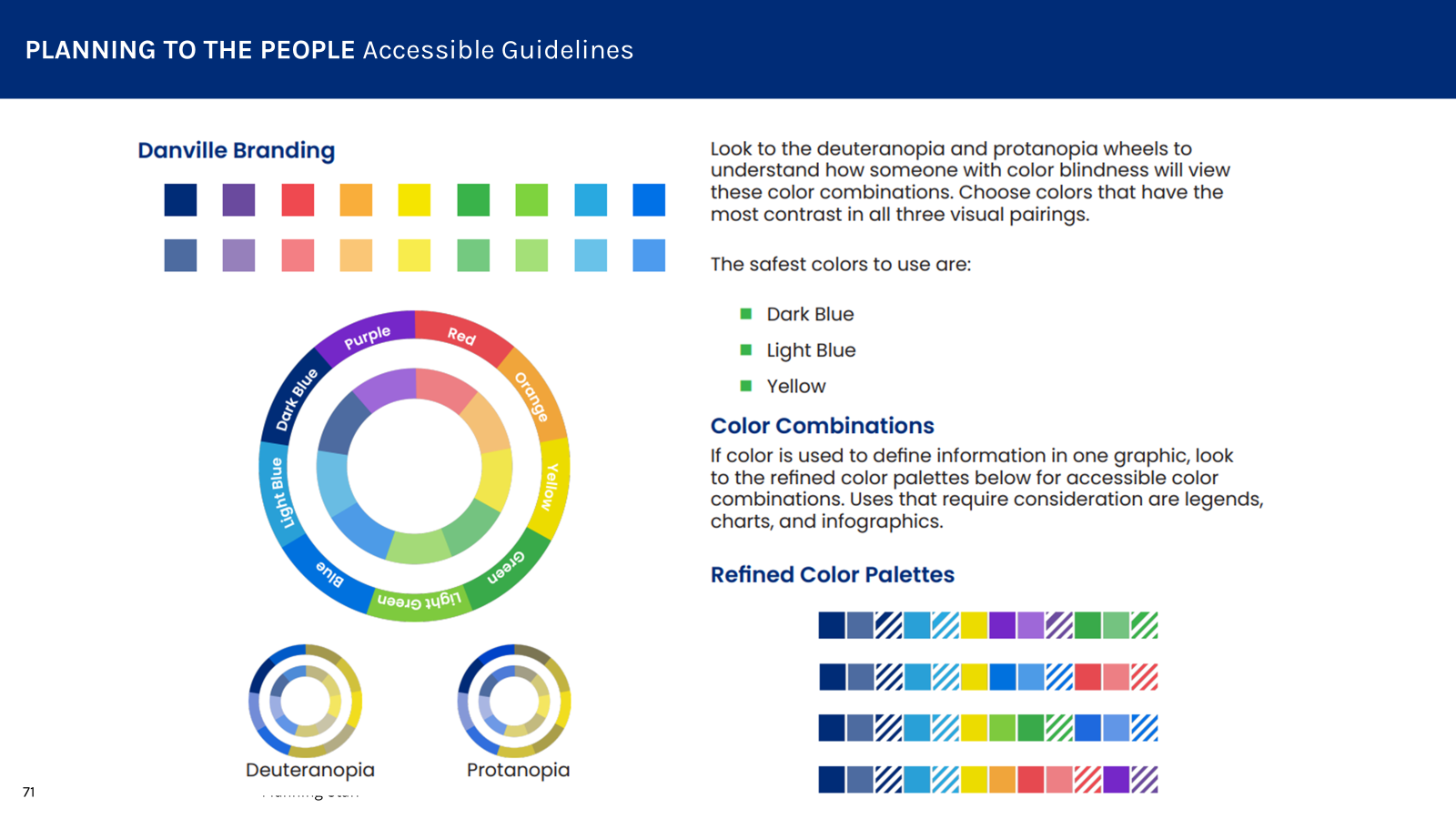
Image 1 and 2: PLAN Danville's Planning to the People accessibility guidelines (illustrating the plan's branding and visual design). (Credit: SmithGroup)
Danville's Future Work
The plan became effective January 1, 2025. Since then, the PLAN Danville team has created scorecards to be used in the city's capital improvement program (CIP) budgeting process. Each project submitted for funding must include that scorecard, which ranks a project's alignment with the plan.
The team also continues to have annual Plan Danville events and maintains the plan's website. The city has also begun updating its zoning ordinance to ensure local regulations align with the plan's long-term vision and community priorities.
"These communications keep us connected to the citizens of Danville by letting them know about upcoming events, projects being carried out by city departments, and allowing feedback and comments to be sent to our staff," Hyson says.
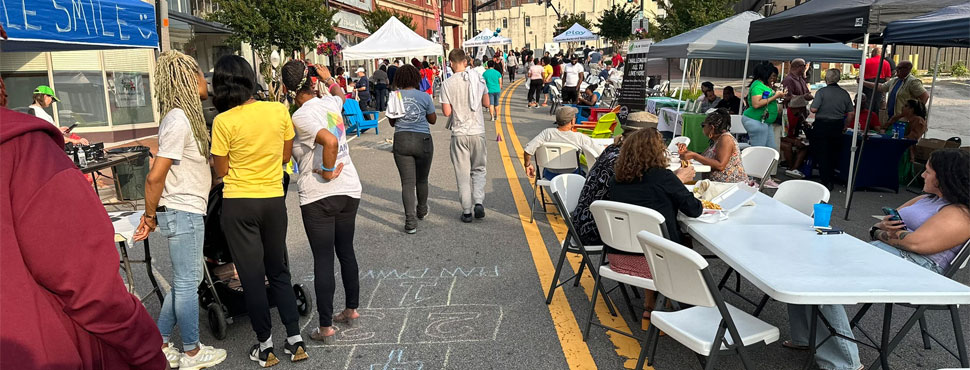
Top image: PLAN Danville's Big Share block party invited community members to review and validate feedback on local strengths, weaknesses, opportunities, and challenges. (Credit: SmithGroup)