

Uncovering JAPA
From Pop-up to Permanent School Bike Lanes
summary
- A case study in Miami shows that pop-up, or temporary, bike lanes can ease parents' safety concerns and increase support for more permanent bike lanes.
- The pop-up demonstration also led to infrastructure improvements at the school, changing traffic flow and generating support from local officials for formal infrastructure.
- Temporary, low-cost demonstrations help overcome public resistance and build momentum for permanent, safe biking networks.
In most U.S. schools, one in 10 children walks or bikes to school. The federal National Center for Safe Routes to School program aims to grow the percentage of students who actively travel through an annual "Bike to School Day", which takes place at schools across the country.
These events are shown to increase kids' motivation to bike or walk, especially in suburban and urban environments. However, the long-term effects depend on the safety of roads. A typical event may require protection from local police, creating an environment of safety on that particular day, altering the outcome of youth and adult riders during the event compared to a typical school day.
In "Case Study: Using Pop-Up Protected Bike Lanes to Encourage Community Support for Safe Streets" (Journal of the American Planning Association, Vol. 92, No. 1), Kurt Kaminer, Michelina M. Witte, and Gillian A. Hotz explore how a series of one-day events with a pop-up bike lane spurred a call for change at an elementary school in Miami.
Addressing Parent Safety Concerns
Parents' concerns about safety often stop children from biking. Yet while protected bike lanes are shown to increase safety, they often face public backlash divorced from rational discourse or scientific data. Pop-up street infrastructure, also known as tactical urbanism, aims to overcome this backlash by allowing people to experience and interact with a low-cost demonstration of what a final result could provide to the community. These temporary installations can range from city-permitted events to unsanctioned, grassroots community interventions.
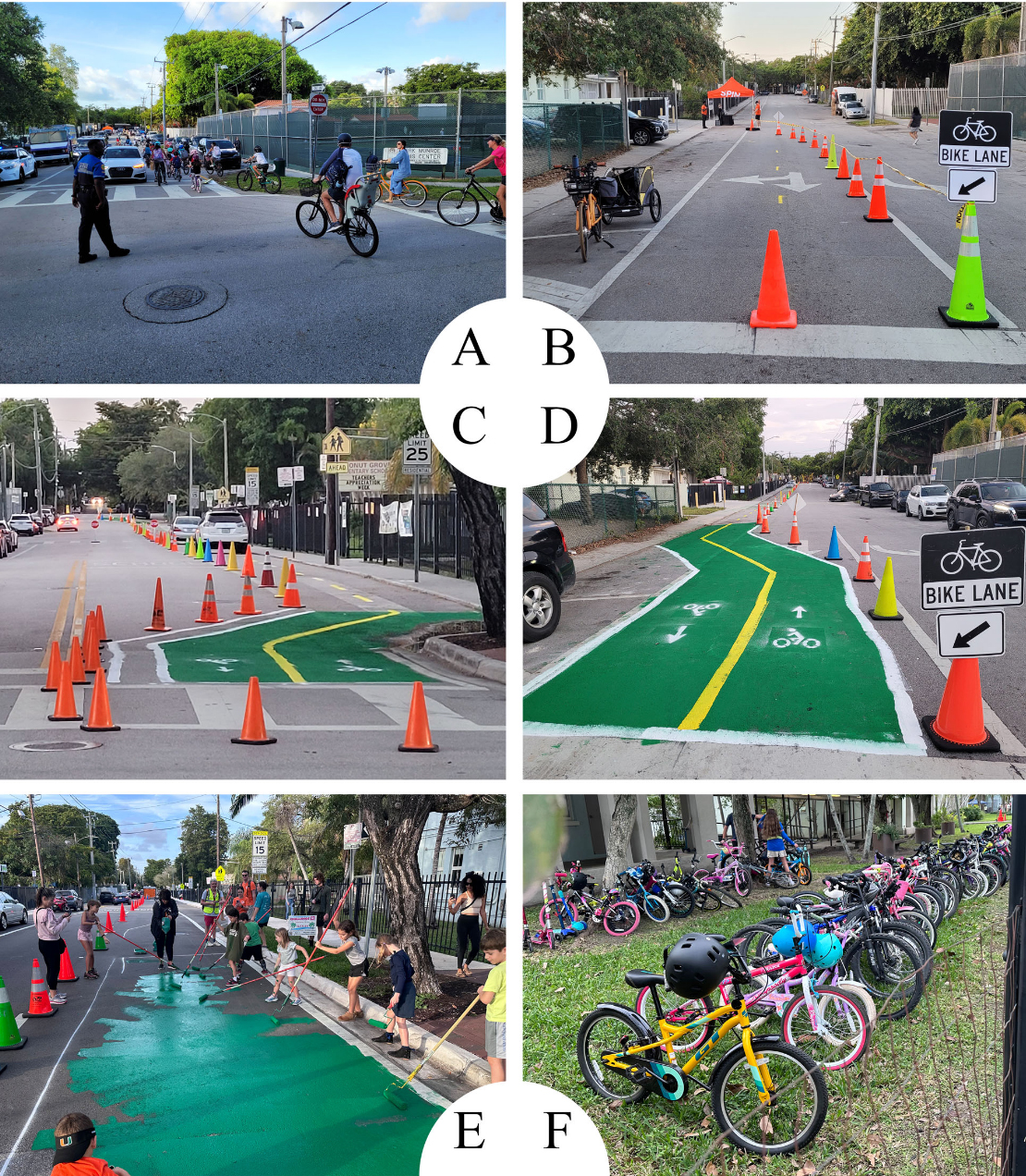
Figure 1: Evolution of Bike Lane to School Day and bike lane pop-ups on Matailda Street, 2021-2024 (Credit: authors)
Bike Lane Pop-Up Evolution
The first pilot involved a 150-foot temporary bike lane fashioned with traffic cones. The authors casually interviewed parents during the first year. Favorable comments and school PTA support led to an expansion of the pop-up for the following year.
At this time, the pop-up bike lane was extended the full length of the block, forming a bidirectional bikeway using the street's parking area. Traffic cones were supplemented with green tempera (washable) paint and posterboard signs. Pop-up events the following year followed the same design; youth and adult volunteers helped prepare for subsequent events.
Staff and volunteers counted the share of cars, on foot, and by bikers before and during the events. Surveys by the authors were distributed by the school, with the approval of the school board's department of communications. The anonymous surveys sought to measure student distance traveled to school, parents' concerns, perceptions of protected bike lanes, and opinions on the pop-up and the value of a permanent protected bike lane.
The November 2023 survey yielded 73 responses. The vast majority of responses were from families living within a five-mile radius of the school. Among parents, 56 percent expressed an interest in riding "nearly every day" if a permanent bike lane was installed, while 23 percent would ride "occasionally." Of the total responses, 77 percent of parents would like to see a permanent installation of the pop-up protected bike lane. Comments in a community WhatsApp chat indicated consistent favorability of the Bike to School Day and the pop-up bike lane, as well as a permanent installation.
Lasting Bike Benefits
Following the pop-up installations, the school modified its drop-off and pick-up workflow. In 2023, the school purchased its own traffic cones to allow its school resource officer to close the parking zone during pickup and dropoff, reducing automotive dropoff lanes from three to two.
While this implementation does not support bicycle and micromobility traffic in the same manner as the pop-ups, the adoption reflects that reducing drop-off lanes improved traffic flow and general order.
The school board and local elected officials expressed support for transitioning the pop-up bike lane into a long-term, permanent improvement. As of February 2026, Miami-Dade County and the City of Miami had begun exploring options to expand the project into a pilot featuring formal infrastructure following publication of the article.
The emotional appeal of "Bike to School" events across a wide spectrum of community members justifies a rational decision to build bike lanes. This repeated pop-up event was directly responsible for generating a request to implement another pop-up event at a middle school in the same county. That event received full municipal support and local news coverage.
Challenges to overcome
Despite support from community members, planners, and traffic engineers, local politics and real estate developments can often add complications or friction. The authors encourage developers to be active partners in mitigating automobile traffic through scalable alternatives such as protected bike lanes.
More deeply entrenched are issues relating to the built environment of schools. This pop-up took place on a turn-of-the-century street network that already limited the amount and speed of automobile traffic. Modern mega-schools are often surrounded by arterial roads with minimal neighborhood connectivity, where a pop-up of this type would not be feasible. Nevertheless, the authors point toward the promise of emphasizing school-based interventions at older, mid-century schools built within smaller, local street networks.
Pop-up protected bike lane events designed to showcase support for youth active transportation may help to overcome public backlash and allow the expansion of cohesive bike networks supporting riders of all ages and abilities.
Top image: Photo by iStock/Getty Images Plus/ Bilanol
ABOUT THE AUTHOR