
Dispatches from New Zealand: Why Global Exchange Matters More Than Ever
summary
- Petra Hurtado, PhD, APA's chief foresight and knowledge officer, shares highlights from the New Zealand Planning Institute's annual conference held in March 2026.
- Key takeaways were how planners worldwide are rethinking "business as usual" through inclusive practice, emerging technology and AI, continuous reform, and cross-disciplinary collaboration.
- Hurtado also explains why global exchange helps APA members anticipate trends and strengthen communities in the U.S.
In late March, I had the privilege of traveling to Wellington with American Planning Association (APA) President Sue Schwartz, FAICP, to attend the annual conference of the New Zealand Planning Institute.
And what a trip it was. From the very beginning, this experience reminded me why international exchange is so essential to a resilient future of the planning profession and how much value it creates for our members back in the United States.
A Grounded Beginning
The conference opened with a pōwhiri led by mana whenua in Whanganui-a-Tara. It was a powerful and grounding start, centering connection to land, people, and purpose.
That sense of connection carried through the entire event. It showed up in conversations about stewardship, belonging, and responsibility, as well as in a shared understanding that planning is not just technical — it is deeply human.
Helmut Modlik, CEO, Te Rūnanga o Toa Rangatira, beautifully captured this idea during his keynote, which included a slide with this message:
"The water lives, the land lives.
The land lives, the people live.
Protect Mother Earth."
Planning is Evolving Everywhere
Across keynote sessions by Sally Smith, Bariz Shah, and Modlik, several themes emerged that resonate far beyond New Zealand. Planning, it turns out, faces similar challenges across the globe.
Planning is often misunderstood. Rather than sidelining planners, we — as planners — need to better communicate the value we bring, especially in helping people understand what's possible with their land and communities.
Planning alone is not enough. Governments must use all available levers for change. Some sit within planning frameworks, but many do not. Therefore, cross-disciplinary collaboration is more important than ever.
Reform is continuous. Planning reform is not a one-and-done effort. It's an ongoing process that must evolve alongside changing social, environmental, and political conditions.
Belonging looks different for everyone. Inclusive planning requires recognizing and embracing diversity.
These insights reinforce something we see in the U.S., as well: the profession is in transition, and clarity of purpose has never been more important.
From Resistance to Readiness: Technology in Planning
One of the highlights of the conference was meeting Christine Coste, an APA Foresight trend scout, in person. Our conversation — spanning artificial intelligence (AI), PlanTech, and the future of practice — was as energizing as it was thought-provoking.
Coste's session explored three scenarios for how digital technologies might shape planning by 2030. A key takeaway was that planners are not resistant to technology; they are thoughtful about it. What may appear as hesitation is often uncertainty:
- How does technology align with professional judgment?
- What are the ethical implications?
- How does it integrate into real-world practice?
Creating space to explore possible futures, even briefly, helps make these questions tangible and actionable. Her closing message stayed with me. "Today's technology decisions shape tomorrow's planning reality," Coste said. "Let's be brave and deliberate about creating that future."
Rethinking 'Business as Usual'
Another recurring theme was the growing recognition that traditional approaches to planning are no longer sufficient.
As Steven Duong, vice president, AECOM, put it during his keynote, planners need to focus more on the cost of inaction and shift from "what do we need?" to "where are we going?" He also advocated for designing plans that are adaptable and flexible, embracing uncertainty rather than avoiding it.
Or, as Adam StJohn Lawrence, cofounder of WorkPlayExperience, framed it, "Plan what you can, then shape what emerges."
These are not uniquely New Zealand challenges; they are global realities. And they are directly relevant to planners across the U.S.
The Power of Exchange and Representation
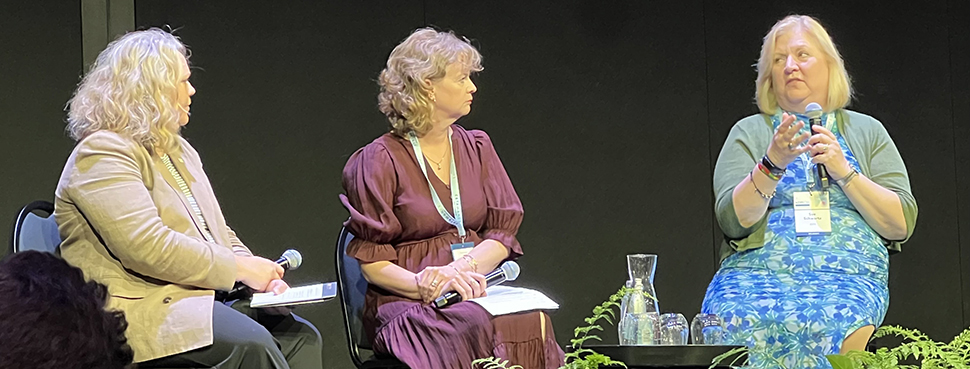
One of the most inspiring moments of the conference was the all-female presidents panel featuring Sue Schwartz, FAICP, and her counterparts from New Zealand (Andrea Harris) and Australia (Emma Riley).
It was candid, honest, and energizing.
What stood out most was the openness of the conversation. When women come together to share experiences, it creates space for real dialogue, learning, and mutual support. Despite differences in geography and governance systems, the challenges discussed were strikingly similar. And that's exactly the point.
Experiences like this are not just inspiring; they are strategically important. They allow us to:
- Bring back practical insights that inform our research, resources, and guidance for APA members
- Build global relationships that strengthen the profession as a whole
- Spot emerging trends early, before they fully materialize in the U.S. context
- Test ideas across different systems, gaining insight into what works (and what doesn't)
Looking Ahead
What I took away most from this trip is a sense of shared momentum. Across countries, planning is being reimagined as more:
- Adaptive and proactive
- Inclusive and open to change
- Foresighted, while acknowledging mistakes from the past
- Deeply connected to people while technologies evolve
The questions we're asking in the U.S. are not isolated. They are part of a broader, global conversation. By engaging in that conversation, we create more value — not just for our profession but also for the communities we serve.
Top image: An all-female presidents panel featuring (left to right) Emma Riley, Andrea Harris, and APA President Sue Schwartz, FAICP, took place at the New Zealand Planning Institute's annual conference in March. Photo courtesy of Petra Hurtado.
ABOUT THE AUTHOR