

Feb. 17, 2026
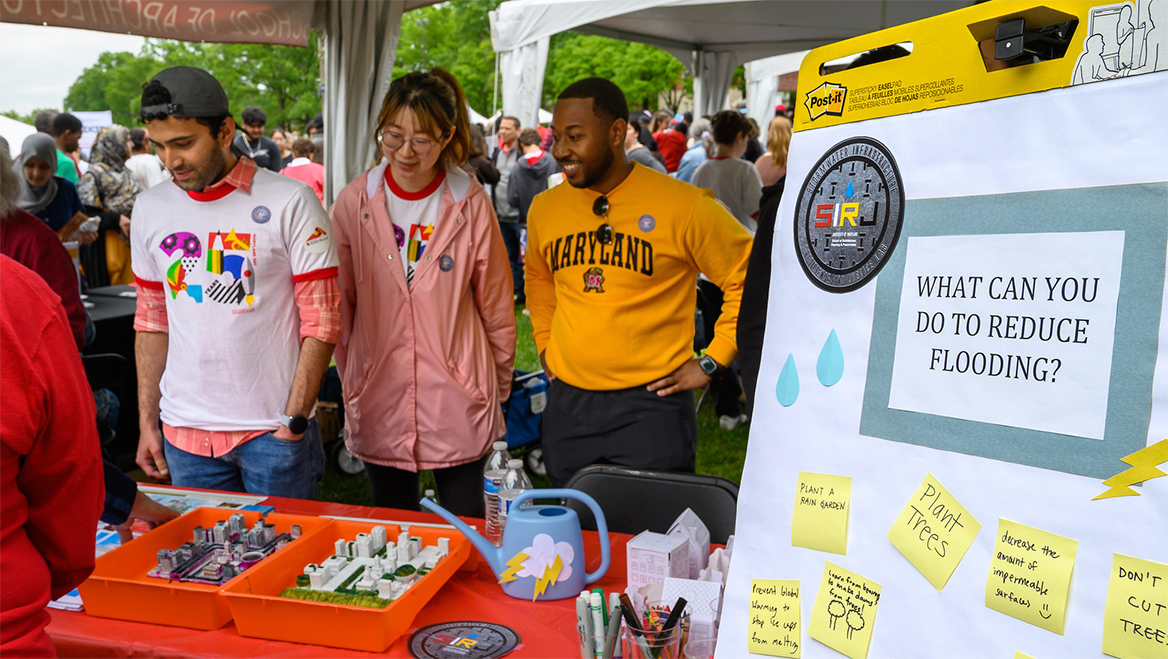
Marccus Hendricks, PhD, wasn't even aware of planning as a profession when he started college in 2006. But today, he's an associate professor at the University of Maryland, where he directs the Stormwater Infrastructure Resilience and Justice Lab (SIRJ).
He's also trying to make sense of what's going on at the federal level and how it affects science, planning, social justice, and local communities. We recently spoke on the American Planning Association (APA) podcast, People Behind the Plans. This interview has been edited for length and clarity. Listen to the whole conversation at planning.org/podcast.
MEGHAN STROMBERG: How did you find your way to planning?
MARCCUS HENDRICKS: I'm a first-generation college student, and I started out training to be an emergency medical technician. As an 18-year-old kid, my childhood dreams were coming true: I was riding in ambulances with the sirens blasting. Then, and later as I pursued a master's in public health at Texas A&M, I came to recognize that a lot of the calls we went on were not true emergencies; they were for primary care because people didn't have access to routine medical care. I was motivated by this idea of root causes and finding an opportunity to address public health issues sooner. As I finished my public health master's, I discovered the renowned Hazard Reduction and Recovery Research Center across campus, and the rest is history.

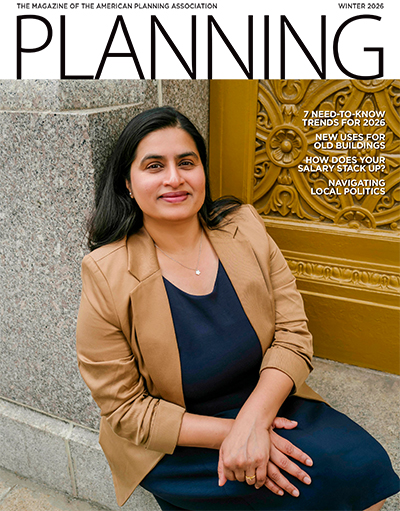
Marccus Hendricks, PhD, was an environmental justice advisor to the Biden administration. Photo by Arminta McKinney/Impact Lens Media.
STROMBERG: What is the connection between public health and planning?
HENDRICKS: Zip code is a much stronger predictor of health outcomes than any physiological indicator. Who holds the power to shape that built environment? It's planners at the local level. When we think about basic infrastructure — grocery stores, libraries, educational facilities — their placement and distribution are critical to quality of life and are drivers for short- and long-term outcomes. Planners have a critical role here. Even though we don't have "health" in our titles, we hold a responsibility to the health and safety of communities through the planning that we do.
STROMBERG: How did you get into your work on flood resilience and vulnerable communities?
HENDRICKS: I was brought up in an inner-city Dallas neighborhood that was plagued by poor air quality, pollution, and flooding. Meanwhile, in other parts of town that were healthier, wealthier, and frankly, whiter, there was a stark difference in the experience and built environment.
Through my work and research today, I frame it not only through social vulnerability, but also through slow violence. How do we, over time, perpetuate violence through planning, practice, policy, and implementation? Are we creating an urban form that perpetuates the social vulnerabilities that ultimately lead to disasters? I wanted to get after the root causes of how we got here.
STROMBERG: Are there places that encapsulate some of these ideas?
HENDRICKS: In my dissertation, my quantitative models showed the inventory, condition, and distribution of two infrastructure systems — stormwater and transportation systems — in Houston. They also showed that communities of color, predominantly Black and Brown communities, didn't have the same type of infrastructure or levels of maintenance. That dynamic also exists in Washington, D.C. and Baltimore. The work reinforces the need for more research in planning, public health, and engineering related to what I'm calling infrastructural justice.
"The most transformative work happens at the local level. Despite the politics and what may be happening at the federal level, there's always an opportunity at the local level."
STROMBERG: You focus a lot on meaningful community engagement. Have you seen instances of community distrust of planners or planning?
HENDRICKS: Meaningful changes are critical, and planners should think of themselves as brokers toward transformation through the vision of community. Sometimes, there is a reluctance to trust and engage with folks who, in the community's eyes, represent the government. The community speaks, they demonstrate, they attend meetings, they disrupt, and they do absolutely everything that they can to bring attention to the issues that they know to be important. And yet, still, rarely do things change for the better and for their benefit.
STROMBERG: At the federal level, pro-planning programs and funding have been cut, eliminated, or changed. What do you make of this uncertainty?
HENDRICKS: I think, in real time, many of us are trying to make sense of it all. I think we have been forced into this choice of either capitulation and shifting our research programs to topics that effectively are politically sanitized or to remain steadfast in truth and exploration. I've even had to suppress the dissemination of some of my work that's related to climate change and environmental justice.
This era is daunting and emotionally exhausting, but I feel prepared for this moment, quite frankly, just as a Black American. Black Americans often deal with this feeling of living between our real, lived experiences — things we know to be true — but having to mask that truth.
STROMBERG: What advice and guidance do you give to students and emerging planners?
HENDRICKS: The most salient thing that still resonates with me is to trust the process while also questioning it. Those two things don't have to be mutually exclusive. Trust the planning steps and requirements that we know are appropriate and successful but recognize that change doesn't come along by doing what has always been done. There's always an opportunity for change, growth, disruption, and renewal. Also, be a community liaison, a broker between local government and elected leadership and communities. Allow your expertise to enhance, not erode, and create space for communities to guide and lead actively.
STROMBERG: Any advice for planners at the local level?
HENDRICKS: The most transformative work happens at the local level. Despite the politics and what may be happening at the federal level, there's always an opportunity at the local level. I had the opportunity to be a senior advisor to President Biden in the Office of Environmental Justice. That office was responsible for implementing the Justice40 program, the Environmental Justice Scorecard, and the Climate and Economic Justice Screening tool, which was enacted through the Bipartisan Infrastructure Law and the Inflation Reduction Act. Two bipartisan laws enacted via the President and Congress to support this environmental justice agenda. Even though at this moment, I'm having an episode of Severance — did this really happen? — I think we planted the seed for possibility for action at that local level.
I would encourage planners to take those programs as examples and implement similar ones at the local level. There's always hope and possibility. At the end of the day, communities and people have the power, and planners can help to support, organize, and mobilize them. Position them to be the voice of change and transformation.
RECOMMENDED ARTICLES