

Feb. 5, 2026
Just months after President Donald Trump began his second term and started dismantling many federal policies pushed by his predecessor to get people to buy and use electric vehicles (EVs), the city of Rolling Meadows, Illinois, installed six new EV chargers at its city hall.
The chargers are free to members of the public, regardless of whether they live in the Northwest Chicago suburb, for up to four hours at a time. Rolling Meadows, home to about 25,000 people, also installed a seventh charger to power up its own EV — a Chevy Bolt used by the city's building inspector. That charger would also support additional vehicles the city plans to buy in the coming years.
Meanwhile, the city updated its zoning code with ambitious requirements mandating new apartment and condo buildings be "EV ready" with conduit and electric infrastructure installed in their parking lots that would make it easier to add charging stations. Large commercial parking lots also must include EV chargers, and new gas stations must include one charger for every four gas pumps. Rolling Meadows has streamlined the application process for residential properties, too. Electric permits to install chargers in home garages are usually approved within three days.
It seems the turmoil at the federal level over EV policies and the auto industry's increased wariness toward a switch to electric power have not slowed things down in Rolling Meadows. In 2025, the number of EVs registered in the city went from 265 to more than 450.
"There was some pretty healthy and robust discussion about how much we can rely on private development to install this kind of public infrastructure," says Robert Savage, AICP Candidate, a planner and management analyst for Rolling Meadows.
Council members also were concerned about the cost the new rules would impose on developers but ultimately opted to go forward anyway. "What it came down to is that we think the technology is here to stay," Savage says. "Where you build chargers is where people buy EVs — and the more we can help that out, the more we'll see those clean technologies on the road."
A critical juncture
The last year has seen massive changes in the EV landscape. Many of those have come from the federal government, as Trump and the Republican majorities in Congress have knocked the legs out from under many critical programs.
Many of the earlier provisions enjoyed at least some bipartisan support, but the administration has stopped doling out many grants that supported EV infrastructure, including the annual distributions to states under the $5 billion National Electric Vehicle Infrastructure (NEVI) Formula Program. Passed in 2021, it focused on building high-powered chargers along key interstate corridors. After litigation, the administration eventually flipped the switch back on for those grants, but removed requirements written by former President Joe Biden's administration that it characterized as "red tape."
The U.S. Department of Transportation (DOT) also halted payments of the Charging and Fueling Infrastructure Grant Program, a companion to NEVI to help local communities and organizations — not just states — install chargers in public spaces, particularly in rural or low-income neighborhoods. In the final weeks of Biden's term, the agency awarded $636 million to 49 recipients through the program, but it appears none of that money ever materialized. In December, 16 states and the District of Columbia sued the Trump administration over the delay.
The GOP-led Congress also has made EV purchases less attractive. As part of its One, Big, Beautiful Bill, lawmakers ended a $7,500 tax credit for buying certain new EVs and tax breaks for EV chargers installed after June 2026. It also ended penalties for automakers that didn't comply with fuel-efficiency standards and eased back mileage rules for new vehicles.
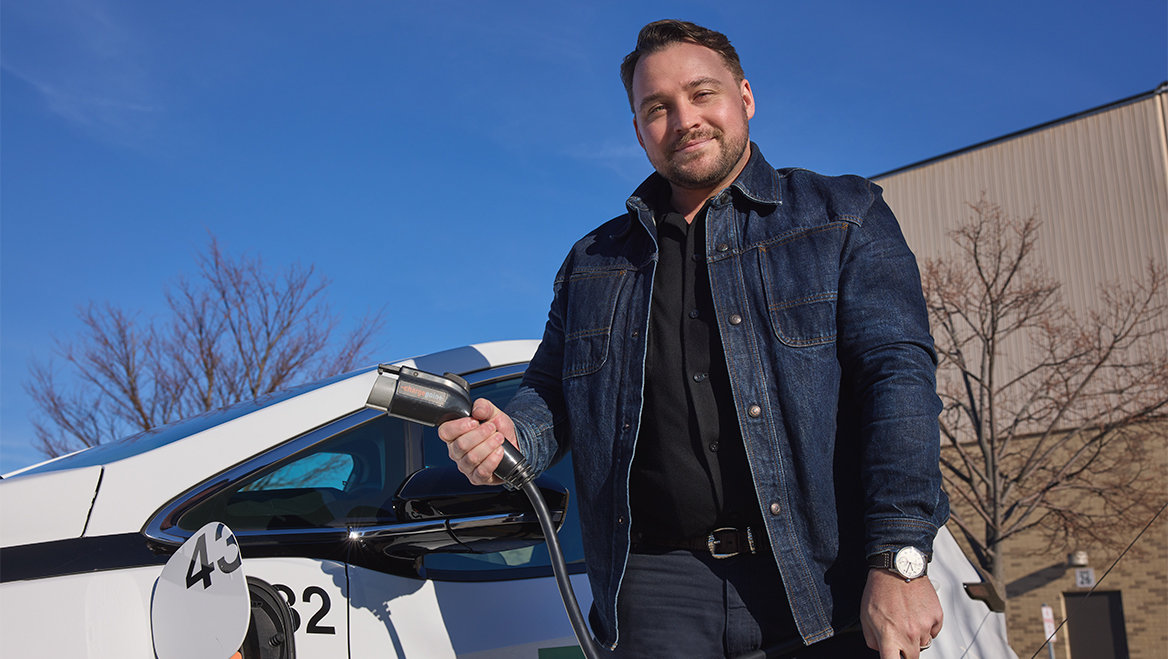
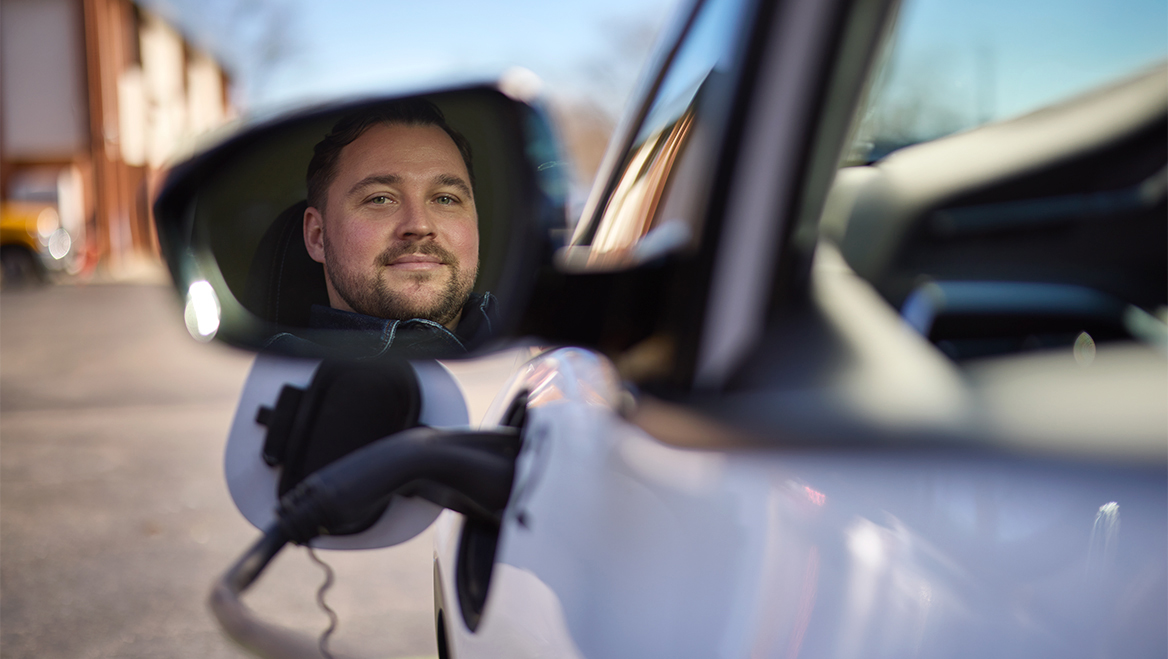
Distributions from the National Electric Vehicle Infrastructure Formula Program and private sector were responsible for much of the public EV charger growth in 2025, and planner Robert Savage sees a connection between consumers' buying habits and already-built infrastructure. Photo by Tim Klein.
Meanwhile, automakers have curbed many of their most ambitious goals for transitioning to electric power. While EV sales have grown in recent years, they have fallen short of industry expectations. Ford is halting production of its all-electric F-150 Lightning trucks and replacing them with hybrids, and other automakers are scaling back their plans for heavy-duty EVs. Toyota and Honda also are focusing on developing hybrids instead of full EVs. This comes as tariffs imposed by the Trump administration have made producing electric vehicles more expensive.
Preliminary data suggests that EV sales might have declined in 2025, the first annual drop since 2019, but EVs are still gaining ground overall. Customers bought EV models to get federal tax credits before those expired, and the number of available public chargers continues to grow. There were 233,000 chargers installed nationwide by the end of November 2025, an increase of 40,000 chargers from the previous year.
The private sector is responsible for much of that growth, including networks run by Tesla and other automakers. Chargers also have become more reliable and powerful.
"People didn't get the memo that they're supposed to stop buying EVs and deploying charging stations," says Matt Stephens-Rich, director of programs for the Electrification Coalition, a nonpartisan policy and advocacy organization.
Stephens-Rich says that the spirit behind the NEVI program has been met, "if not by the states directing funds, then with the private investments that have been coming in."
However, J.D. Power reported in August that EV consumers are growing less satisfied with their charging options, even as chargers — particularly the DC fast chargers like the ones deployed by Tesla and at gas stations along interstates — become more widely available.
Shifting gears
All the changes taking place have left many local communities trying to adjust to shifting circumstances while rolling out long-term plans to ease the transition to EVs. Federal incentives and automaker ambitions, for example, spurred so much investment into EV infrastructure in southern states that the region is sometimes called the "Battery Belt."
Georgia has been at the center of the recent boom. In July, electric truck maker Rivian announced it would open a 500-person "East Coast headquarters" in Atlanta to go along with a $5 billion, 7,500-employee manufacturing plant in the region. In addition, Hyundai opened a new factory near Savannah to produce both electric and hybrid vehicles.
Last year, the Atlanta Regional Commission (ARC), an intergovernmental agency that serves as the area's metropolitan planning organization, released a federally funded plan to support the transition. "EVs are among the many tools utilized in our regional planning work to reduce vehicle emissions in the Atlanta region and meet federal air quality standards," says Paul Donsky, an ARC spokesperson.
Building a 21st Century Transportation System
The Atlanta Regional Commission (ARC) intends to build on its existing EV infrastructure (see map) and statewide goal of being the electric mobility capital of America, according to the 2050 Metropolitan Transportation Plan. Meanwhile, the 2024 Regional Transportation Electrification Plan projects a 50 percent EV adoption rate by 2030, which could result in nearly 500,000 EVs on Atlanta roads. Map courtesy of ARC.
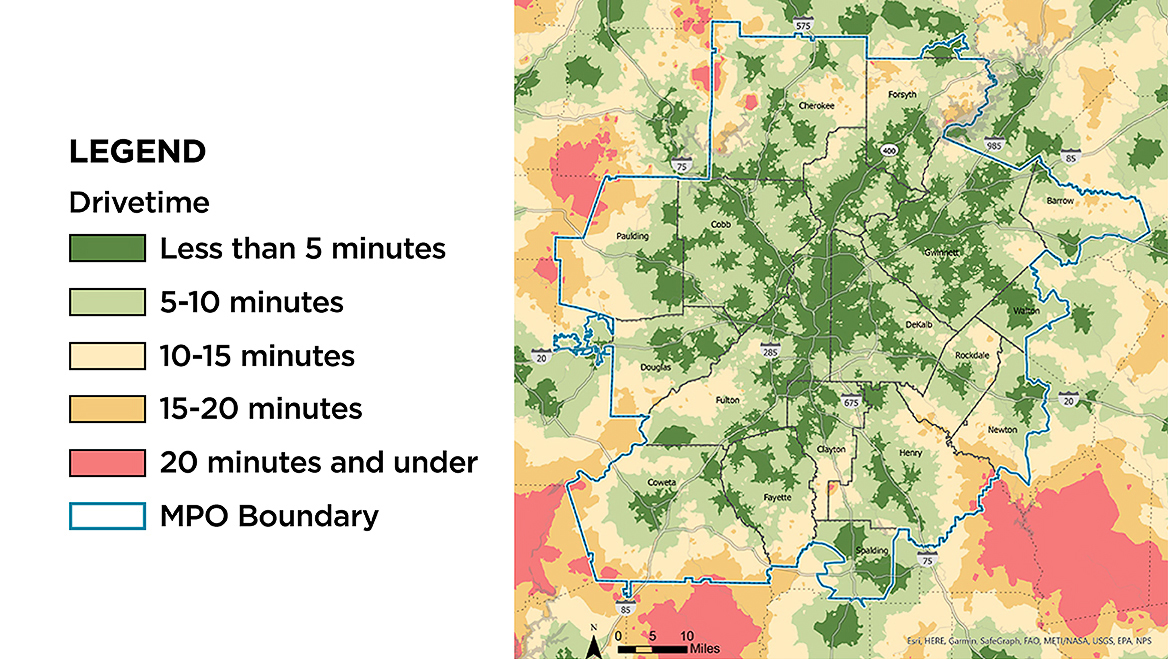
Colorado is another state that went all-in to encourage EV adoption. Since 2024, the percentage of EVs sold out of all new cars is even higher there than in California, long the top state in the country.
State incentives helped. Colorado offered $5,000 credits on top of the federal incentives in 2024 — but state budget constraints dropped that to $3,500 at the start of 2025, then to $750 beginning in 2026. After the federal incentives expired last October, though, state officials announced they would increase incentives for low-income residents to trade in gas-powered cars for EVs, from $6,000 to $9,000.
Meanwhile, the Trump administration canceled several environmental grants for Colorado communities, including $11.7 million to help Fort Collins install new chargers and electrify its municipal fleet.
Transportation planner Dashiell Bubar-Hall, AICP, says the canceled grants added to an already challenging environment. "Charging projects get very expensive very fast, and [federal money] helps cover the cost of the charger," Bubar-Hall says, "But all of the extra work [including maintenance] — which is actually the expensive part — still needs to get covered with local dollars."
Still, Bubar-Hall says the city is moving forward with fleet electrification. "We're not going to abandon [those efforts] by any means, but we're going to have to be creative about funding," Bubar-Hall says, noting that Fort Collins already has eight electric buses.
The city also has tried to spur adoption of EVs through its building code by requiring most parking spaces in multifamily developments to either have chargers deployed or infrastructure installed to make it easy to put in chargers later.
Trouble in transit
For communities hoping to electrify their transit fleets, many significant obstacles remain. The Trump administration is de-emphasizing the transition to EVs, which was a major part of the Low- or No-Emission Grant Program. When the DOT announced $2 billion in awards through the program in November 2025, almost none of it went to zero-emission buses. Low-emission buses, such as diesel-electric hybrids or those that run on compressed natural gas, secured 97 percent of all the funds, according to Transportation for America.
"Now a program created nearly 10 years ago specifically to prioritize the deployment of zero-emission buses is going to buy almost none of them," according to a Transportation for America press release.
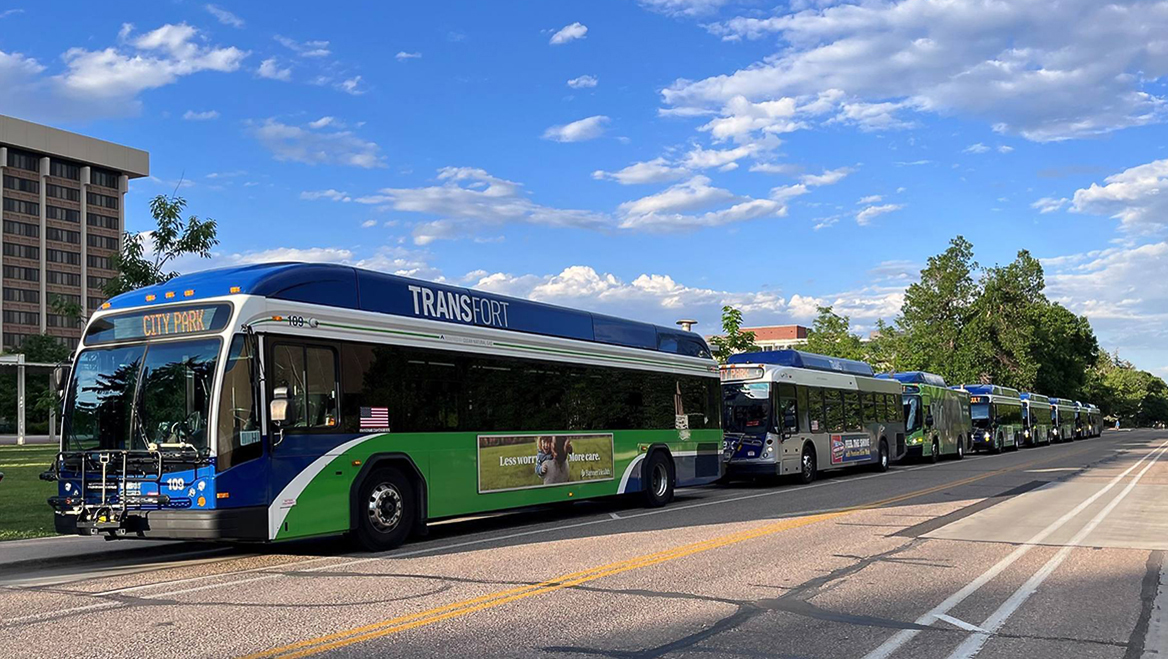
Fort Collins, Colorado's Transfort electric fleet operated free shuttle bus routes on the Fourth of July in 2024. Photo courtesy of City of Fort Collins.
That comes at a time when transit agencies' procurement efforts are constrained by tight budgets. Lance MacNiven, vice president and transportation decarbonization planning lead for AECOM, and former chair of the American Planning Association's Transportation Planning Division, says there are limited options for acquiring electric buses and other equipment because of long-standing rules requiring agencies using federal funds to buy products made in the U.S. With several bus manufacturers going under in recent years, "the limited supply makes buses more expensive," MacNiven says.
Ongoing issues with battery range and reduced federal support are causing many agencies to stick with buses powered by compressed natural gas or other technologies for now. However, MacNiven believes these issues are temporary. "Each administration is a blip on a long trend line," he says. "There may be years that you don't get as much funding or ridership goes down, but you have to keep your eye on the prize. You can't just completely halt your goals because of one president. You have to keep your agency going and stick to your values."
Paving the way
Several years ago, the Metropolitan Mayors Caucus started a program in the Chicago region for local officials to prepare for the anticipated wave of new federal funding and demands from residents and businesses to use EVs. This included creating a checklist of everything a municipality could do to prepare for electrification — from rewriting zoning codes to exploring vehicle-to-grid systems and electrifying government fleets. It also launched a 20-month course to help local leaders decide what options best fit their communities, says Edith Makra, the group's director of environmental initiatives.
So far, 38 municipalities have completed the program, but not all of them have seen the upward swing in EV interest that Rolling Meadows did. Carol Stream, for example, has seen residential permit applications for EV chargers drop from one to two every month to just three in all of 2025, says Tom Farace, AICP, Carol Stream's planning and economic development manager.
That's partially due to the nature of the community — it has no space that would be a logical spot for public chargers. Still, the Metropolitan Mayors Caucus training program helped, Farace says. "It was almost like a train-the-trainer scenario."
Communities in the area also can take advantage of incentives offered by the power company, Commonwealth Edison (ComEd), which has paid out $140 million since the program launched in 2024. That money has helped buyers purchase or lease 3,000 vehicles, including 130 heavy-duty vehicles and buses. "What we are most proud of is that 80 percent of that has been for low-income and equity customers," says Cristina Botero, ComEd's senior manager for beneficial electrification.
Meanwhile, Makra says the preparation is already paying off across the region. "The rate of increase [for EV registrations] is higher in the EV-ready communities than the state or county average," she says. "We're seeing a bounce in constituent demand and a bounce in the idea of having a progressive, adaptable community that's resilient, ready for the next thing, and taking advantage of the resources that we do have."
RECOMMENDED ARTICLES