

Feb. 12, 2026
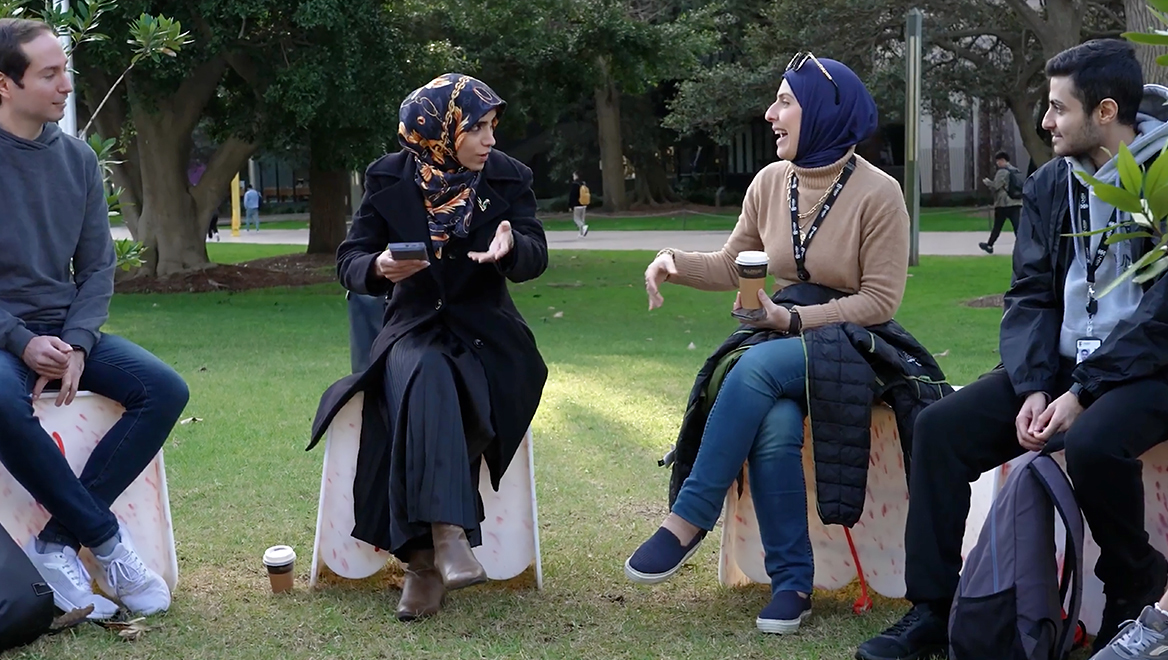
When a dozen playful pink-and-white benches suddenly appeared on an empty strip of grass at the University of New South Wales in Sydney, Australia, something interesting — if not entirely unexpected — happened.
The once-ignored green space, wedged between a busy walkway and a campus café, turned into a mini social hub. Students, particularly women, stopped and lingered; pulled the movable, LED-lit benches into sunny spots during class breaks; and rearranged them to chat with friends.
"The space became quite popular, and it became quite active," says Gonzalo Portas, a lecturer at the university, who co-designed the benches with female industrial design students.
The transformation was for a project called Benchmark that aimed to answer a practical question: Can modest design changes measurably improve how women experience public spaces?
Transport for New South Wales commissioned the project as part of its Safer Cities Program, created to improve women's, girls', and gender-diverse people's sense of security in public. Benchmark paired the benches with smart technology developed by the Massachusetts Institute of Technology's Civic Data Design Lab to capture data about use, comfort, and social interaction, says Sarah Williams, director of the lab and the MIT Norman B. Leventhal Center for Advanced Urbanism.
Using a GoPro camera and AI-driven computer vision sensors, the technology tracked users' locations every 5 seconds for three weeks in 2024 and mapped them onto coordinates. For privacy protection, the software converted the people pictured into anonymized stick figures and used pose-detection algorithms to determine whether they sat or stood, how long they lingered, and how they socialized.
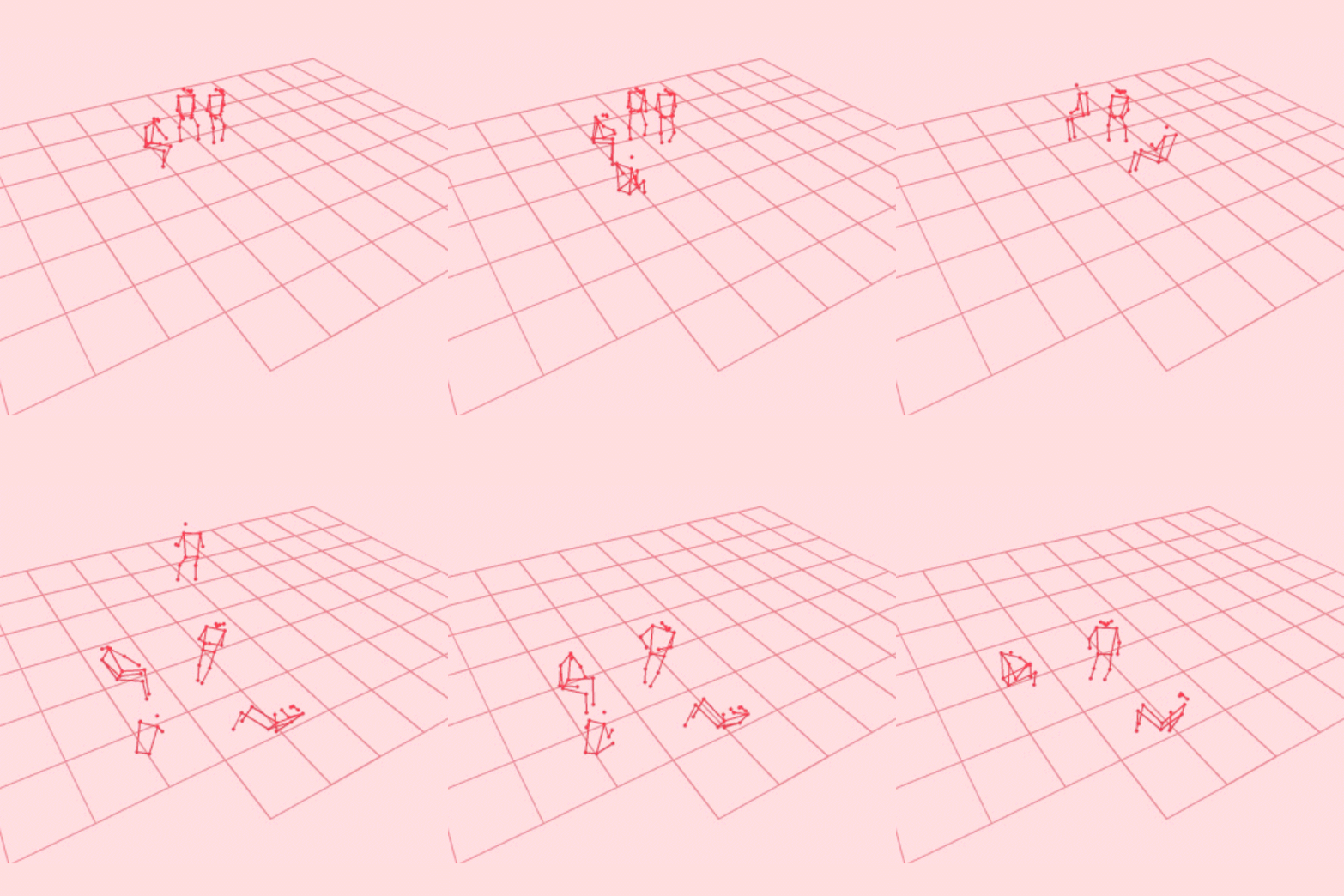
Detection models process GoPro camera images and visualize bench users as stick figures. Images courtesy of MIT Civic Data Design Lab.
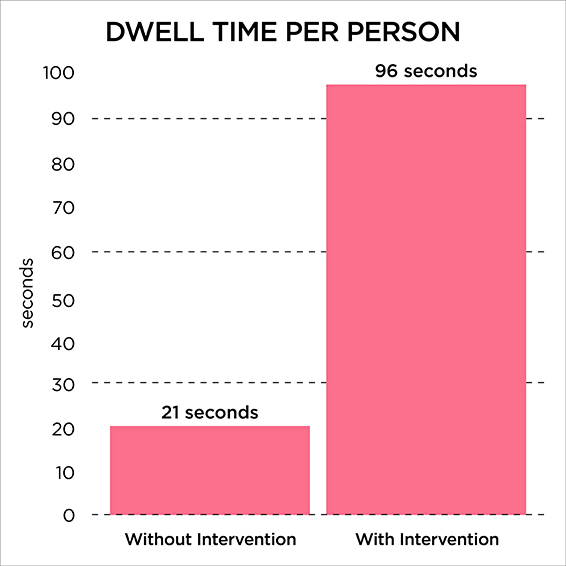
The average dwell time per person saw an increase of 357 percent, suggesting that the benches made the outdoor space more comfortable.
Since the software doesn't distinguish between genders, student researchers also visited the site several times a day to count the number of women present and interview them about how they felt about the space, Williams says.
The study found even small interventions can bring big results. Five times as many people — and eight times as many women — used the space after the benches were introduced, while six times as many people used it at night. Socializing, which the researchers defined as remaining within 1 meter of another person for more than 2 minutes, jumped from zero to nine people per day.
Based on the interviews, nearly 75 percent of women felt more comfortable in the space, and 85 percent said the benches made social activities easier.
"I think what's super important in thinking about designing spaces for women and girls is to make sure that they feel safe and are seen," Williams says. While Benchmark confirmed what she knew intuitively as a woman, "it helps to prove it through the data."
Reimagining spaces for women
According to Inés Sánchez de Madariaga, PhD, a visiting scholar at MIT who has led efforts to embed gender in land-use legislation and urban planning in Spain, the findings echo prior research showing that "women and girls like to create places where they can sit and talk." Public parks, however, often are built to facilitate sports, which tend to be preferred by men and boys, she says.
Like many professions, planning and urban design are historically male-dominated, so public spaces are often designed with men in mind, says Caroline Dwyer, AICP, interim assistant director and planning manager of Chapel Hill Transit and executive committee chair for the American Planning Association's Women and Planning Division.
For example, public transit's orientation around peak commute times doesn't align with how most women travel, Dwyer says. Women are more likely to be caregivers and typically make multiple stops a day, whether that's dropping children off at school before work or stopping for groceries, a concept known as trip chaining.
"Just in my own anecdotal experience, I find that men do not always think about spaces in the same way," Dwyer says. "They don't observe their surroundings in the same way that women do."
Video courtesy of Transport for New South Wales.
Portas agrees, which is why he felt strongly about letting his female students lead the design process. "It was really wonderful to see how the women did things differently than the way I may have started the project," he says.
After testing different materials, the team chose recycled plastic that was light enough to move easily. They embedded motion-activated lighting and added whimsical touches, including handles resembling a pig's tail, to make the benches fun and inviting. The women nicknamed them "the little piggies" because of the resemblance.
Tool for planners
The team has since moved the benches to a park in downtown Sydney, where they repeated the research this past August and September, and has applied for grants to bring the work to Boston this summer. Project partners have created a Do-it-Yourself Guidebook for the open-source sensor kit, so planners, urban designers, and others can create their own projects.
Sánchez de Madariaga, who also is a professor of urban planning at the Technical University of Madrid, says the kit can be useful for planners who wish to test how people interact in or configure a space before committing to permanent designs.
"Professional architects or planners can learn a lot by looking at what normal citizens can do — or would do — when they are given the possibility," she says. "It can bring results that maybe architects wouldn't think of."
For Portas, the project underscored his belief that public spaces must be designed with input from diverse groups, "If you don't design with them, then perhaps you're not actually designing for them."
Williams takes it further, saying the project suggests that everyone benefits when spaces are welcoming for women, and such efforts don't have to be costly. "By including even just small improvements, like these benches," she says, "you can transform a place."
RECOMMENDED ARTICLES