


Jan. 22, 2026
If I had to identify a theme that reflects our current moment — and the work of planners as they plan for the future of their communities — one word captures it all: uncertainty.
It is certainly a thread that runs through the 2026 Trend Report for Planners, which explores accelerating policy shifts, emerging technological innovations, related impacts on the economy and the environment, and society's attempts to adapt to all of this. Whether we look globally, nationally, or locally, the future feels more uncertain than ever.
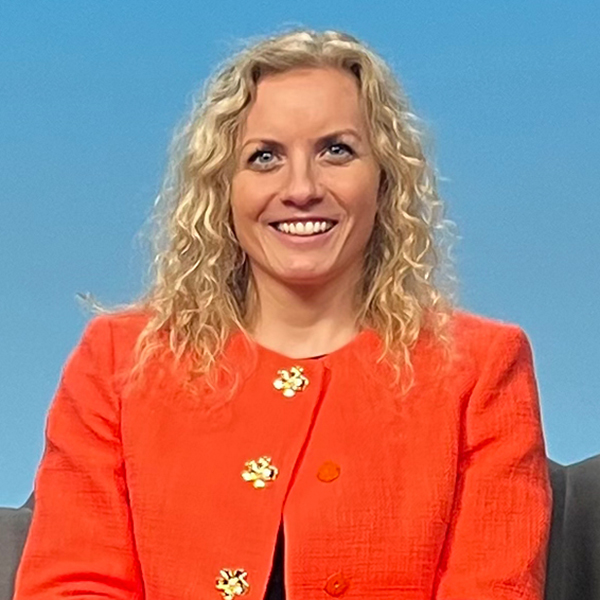
Petra Hurtado, PhD, chief foresight and knowledge officer at the American Planning Association, suggests we need to stop viewing the future as a destination — we must view it as a process. Photo by Cynthia Currie.
This reality makes it increasingly important for us to strengthen our imagination muscles and prepare for multiple plausible futures. Imagination is a skill that combines creativity and facts. It enables us to think beyond the expected, explore a range of possible outcomes, and examine them in neutral ways, without judgment that might limit our ability to see what could be emerging on the horizon. As the late German psychologist, sociologist, and philosopher Erich Fromm put it, "Creativity requires the courage to let go of certainties."
Creativity allows us to embrace uncertainty, which means we have to let go of current beliefs and expectations, accept the unknown, and acknowledge that nothing is fully predictable. It challenges us to become comfortable with being uncomfortable and break out of expected habits, narratives, and ways of thinking.
Staying resilient amid disruption
For a long time, one of planners' greatest challenges has been aligning long-term infrastructure cycles with short-term election cycles, planning for decades when decision-makers often think in terms of years. Today, a third timeline comes into play. We now need to consider technological innovation cycles, which are becoming shorter and shorter.
A major concern among planners — and really everybody else — is the fear of getting displaced by technology, specifically artificial intelligence (AI). These advancements won't eliminate the planning profession, but they will change the tools we use, the tasks we prioritize, and how we do our work. Technology is, after all, something humans create to extend our capabilities. Keeping pace with these changes requires continuous upskilling, learning, and unlearning.
Throughout history, humans have adjusted to technology according to the way we operate, not the way technology does. In that context, it will be even more important in the future to understand that we have a choice: Will we drive technological innovations to improve our quality of life, facilitate certain tasks, and make our lives more efficient? Or will we let technology drive us, changing the ways we want to live, work, and play?
Along the way, we also will need to redefine what human connection means. We will increasingly collaborate not only with other people but also with AI agents and finding the right balance will matter.
A related challenge ahead concerns the value of knowledge in a world where everyone can be an expert — or thinks they can — with the help of AI. Planning is a knowledge-based profession, and data serves as the foundation for much of our work. How do we turn information overload into better decision-making?
One thing is certain: The future won't get shaped by certainty. It will require curiosity, and it's our job to practice that curiosity. We can only act based on what we know in the moment — but the more we know, the better we can prepare.
That's why the 2026 Trend Report for Planners exists: It serves as your tool to inspire curiosity, encourage thinking beyond our usual planning narratives, and help you imagine what's possible based on evidence and insight.
What stands between the future we want and the future we don't want is us. Instead of viewing the future as a destination, we must start seeing it as a process. As planners, we shape the futures of our communities. Embracing uncertainty can help us move from "what if" to "let's do this."
RECOMMENDED ARTICLES