


Sensory Zoning for Neuroinclusive Cities
Zoning Practice — February 2026
By Abdulrahman Alharthi, AICP
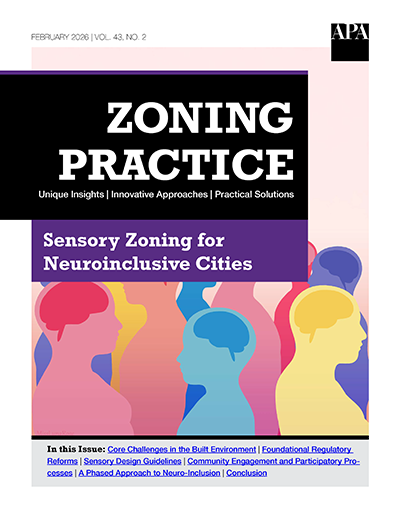
The concept of neurodiversity acknowledges that variations in neurological wiring and cognitive functioning are a natural and valuable form of human diversity, not deficits to be cured. This paradigm encompasses autistic individuals and those with attention-deficit/hyperactivity disorder (ADHD), dyslexia, dyspraxia, Tourette's syndrome, anxiety disorders, and a range of other cognitive styles. Conservative estimates suggest that at least 15 to 20 percent of the global population is neurodivergent. However, this fundamental dimension of human experience—neurodiversity—remains largely invisible to the codes, regulations, and standards that shape our built environment.
Development regulations aren’t just about land use; they are powerful levers for social belonging. To build truly inclusive cities, we must reform regulations with neurodiversity in mind. Incorporating the perspectives of neurodivergent individuals can lead to policies that are more representative and effective. While physical accessibility standards in building codes and street design manuals represent significant progress in designing for bodily diversity, local land use and development regulations have overwhelmingly neglected the diversity of the mind.
This issue of Zoning Practice introduces sensory zoning as a new framework to foster neurologically inclusive communities. It begins by exploring how sensory characteristics of the built environment and standard public participation methods present barriers to neurodivergent individuals before outlining a phased strategy of regulatory reform, sensory-aware design, and authentic co-creation.
Details
About the Author
Abdulrahman Alharthi, AICP