

May 14, 2026
A shuttered school in Kansas City got a new life as a campus for science, technology, engineering, art, and math (STEAM) activities. A former Catholic school in Waterbury, Connecticut, may soon be transformed into housing for medical staff at a nearby hospital. And a suburban community near Milwaukee, Wisconsin, is repurposing a recently closed college campus into much-needed apartments and single-family homes.
Innovative uses for former school buildings are becoming more common, and planners increasingly are being called on to steer conversations about the vacant properties. However, local officials are keenly aware of the public backlash that cities can experience when they close schools.
"As planners, we know that schools are the center of their neighborhoods," says Shannon Jaax, AICP, officer of bond planning and construction for Kansas City Public Schools (KCPS) and chair of the American Planning Association's (APA) Public Schools and Communities Division (PS+CD).
Ariel Bierbaum, PhD, an associate professor of urban studies and planning at the University of Maryland, says school district administrators and other public officials have started to recognize the broader community impact of school closures and repurposing efforts after a wave of closures in the last decade. "They're more attuned to the fact that these schools have meaning to people — emotionally, but also politically," she says.
That's why the inclination of most school districts is to find another use for their vacated buildings, like housing or space for specialty programs, rather than sell them, says Adam Lubinsky, FAICP, a principal/partner at WXY Studio in New York City.
Lubinsky, a Columbia University professor and former chair of the PS+CD, says more closures could be coming. Nationally, public school enrollment is declining, tied in part to demographics: The population is aging, people are having fewer kids, and immigration has decreased. The expansion of school choice policies — such as charter schools, vouchers, and increased support for home schooling — also are major factors.
But closures aren't the end of the road for these buildings.
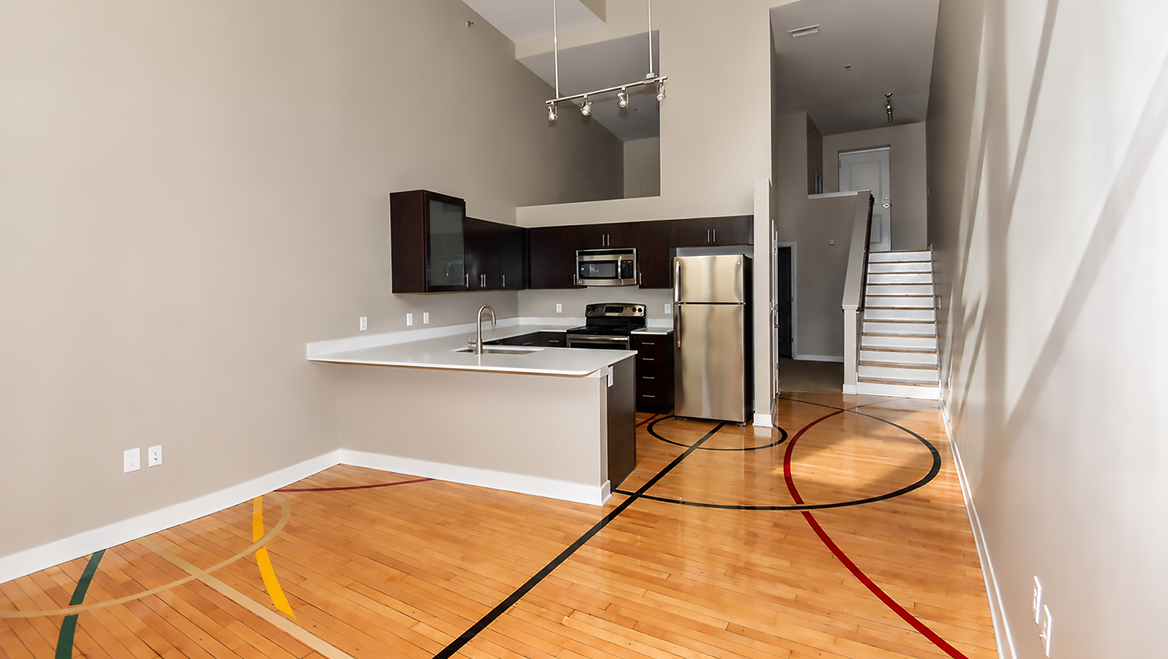
Residents of the West Hill Apartments in Kansas City are unlikely to forget the building's schoolhouse roots, thanks to preserved elements like the basketball court's flooring. The building was renovated using Historic Tax Credits. Photo courtesy of Missouri Preservation.
Reuse success in Kansas City
In 2009, KCPS closed 30 schools to address budget shortfalls and declining enrollment. Jesse Lange, who now leads the district's repurposing efforts as the manager of planning and real estate, says KCPS opted to find new uses for their buildings in phases rather than flooding the market with new properties.
To build community support, district officials held site tours for the public and asked people to share their ideas for the schools' future reuse, whether as housing, parks, or hosting another school. These tours allowed residents to express their frustrations or share good memories, Lange says, which he called an "important part of the process."
Those frequent interactions also helped lead to better projects. "This has never been a money-making endeavor for the school district," Lange says. "Our board and leadership have really been committed to ensuring that we get a good project that the community supports and not have a building that just sits there."
Twenty-two of the buildings have now been sold to other entities, and 15 are up and running. Seven of those have become housing, resulting in 469 total units. Three sites became senior housing, while the other four are market-rate or workforce housing. A 16th property — also housing, this time 45 units of two- and three-bedroom townhomes — will open later this year. Other uses include mixed-use development, an adult day care service, a recreation center, a neighborhood park, and private schools. To ensure developers delivered on their promises, the district used tools like property and deed restrictions and community benefit agreements.
The repurposing effort helped KCPS emerge in a stronger position. Enrollment has grown in the last four years, and voters approved a $474 million bond in 2025 — the first in nearly 60 years — to improve existing schools and build two new elementary school campuses.
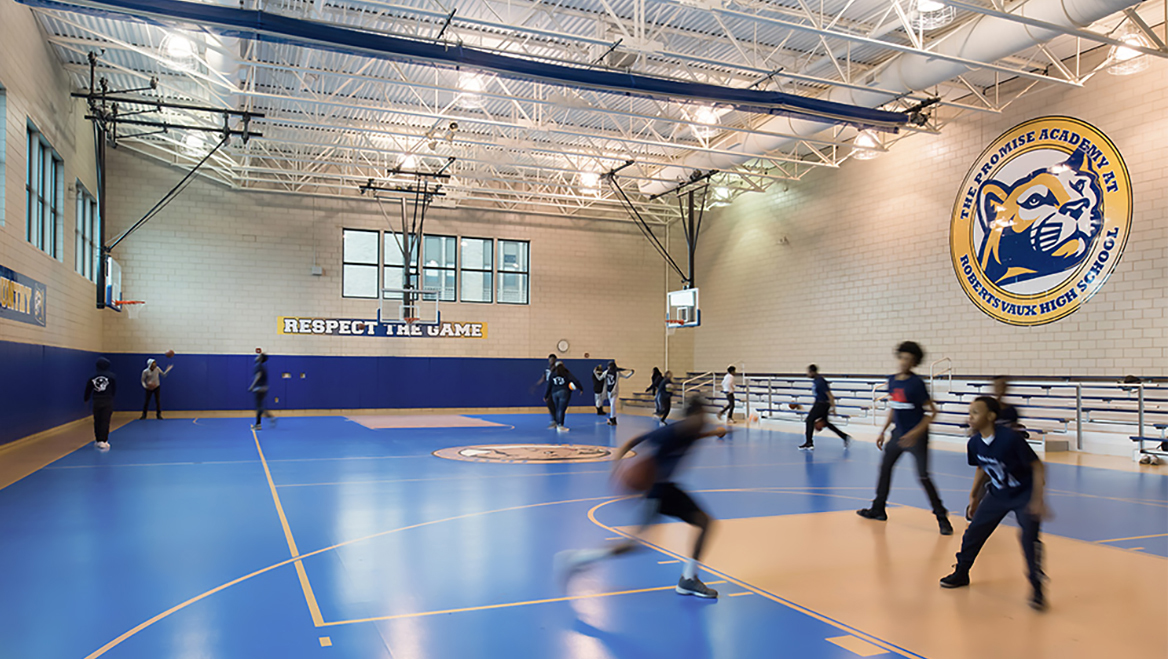
An Art Deco public school in Philadelphia reestablished itself as Vaux Big Picture High School. An employment readiness program and small business development center also are housed in the building. Photo by Kat Kendon/Kendon Photography.
Something beyond housing in Philadelphia
The planning profession needs to have a better understanding of the impact that school closures can have on neighborhoods. "The harms of closure don't end when school buildings are closed," says Bierbaum, the Maryland professor and author of Schools for Sale: Disinvestment, Dispossession, and School Building Reuse in Philadelphia. "These buildings are public assets. They have public value."
One common fear, she points out, is that school districts will sell the school buildings to developers for housing that could trigger gentrification. That was a prevalent worry after Philadelphia closed 30 schools in 2012 and 2013. Bierbaum's work in Philadelphia, however, shows there are alternatives to selling off schools for housing developments. The old Bok High School, for instance, is now a maker space for artist studios, restaurants, a preschool, and nonprofits.
Meanwhile, the Philadelphia Housing Authority bought a high school in North Philadelphia and reopened it as Vaux Big Picture High School in partnership with the school district and the teacher's union, with an emphasis on offering student internships and regular off-campus experiences to further their careers. The housing authority also runs a workforce development center there.
School districts, Bierbaum says, could learn from the unconventional partnership at Vaux. "If you only think about utilization of a building as having kids in seats at desks, that's not a great use of the building," she says, "but you can think creatively."
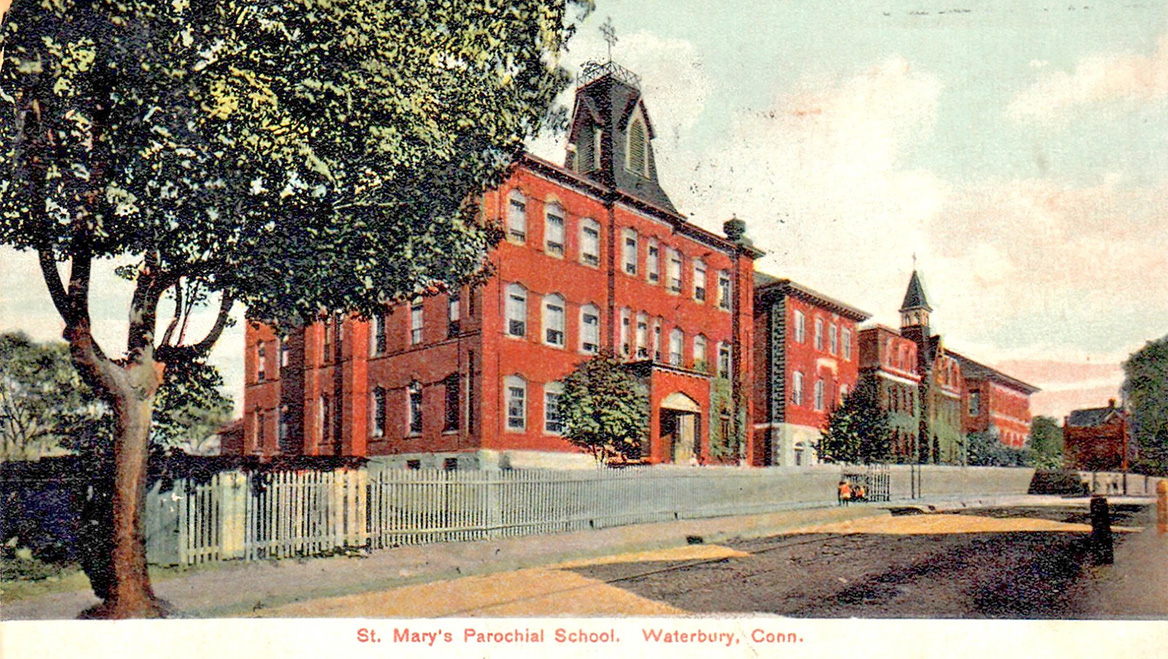
St. Mary School, the first Catholic school in Waterbury, Connecticut, built in 1888, will soon fill a need for workforce housing to support its namesake hospital down the block.
Connecting the dots in Milwaukee and Connecticut
In some cases, planners have worked with local community members and decided that selling a former school is the best option. In the Milwaukee suburbs, county officials had to find a new use for a college campus that the University of Wisconsin (UW) system closed last spring. They concluded that more housing would help the area the most.
University officials announced the closure of UW Milwaukee-Waukesha more than a year before it occurred, giving local officials time to prepare. Waukesha County was at the center of those discussions, because it owned the land, and quickly brought in outside experts to analyze the 71-acre site.
Rather than a community-wide brainstorm, an open house focused discussions on styles of multi- and single-family housing, asking community members for feedback. They looked at examples of real projects in the county, using sticky dots to vote for their preferences.
"It allowed us to change the paradigm," says Dale Shaver, director of parks and land use for the county. "Now, I think the community is generally understanding and is moving down this path."
Housing — particularly "missing middle" housing — is in short supply in Waukesha County, Shaver adds. This project is expected to add 700 single-family and multifamily units that will have a built-out value of $150 million.
Meanwhile, in Connecticut, the city of Waterbury bought a closed downtown Catholic elementary school just so it could have a say about the fate of that important parcel in the heart of its community. The resulting plan will convert St. Mary Catholic Grammar School into workforce housing for a nearby hospital, says Bob Nerney, AICP, Waterbury's city planner. "It illustrates what can be done with properties that had been viewed as low value," he adds. "They're beautiful structures and centrally located."
Since it is a teaching hospital, many doctors, nurses, and even administrators come from all over to train there, but housing in the area is hard to find.
"If the city had not gotten involved, you would have seen a radically different outcome," Nerney says. "That outcome may have been positive or may have been very detrimental to the city, and I think the city did not want to take that risk."
RECOMMENDED ARTICLES